
A Refined Guide to Wedding Venues in Savannah, Georgia
Savannah is not the kind of city that needs to be overly dressed.
The good parts are already there. The shaded squares. The old brick. The iron balconies. The slow walk back from dinner. The way guests can leave cocktails with a drink in hand and still feel like they are part of the weekend, not being shuffled from one obligation to the next.
That ease is what makes Savannah compelling for a destination wedding. It feels intimate, a little tucked away, and deeply Southern without feeling predictable. For the right couple, it offers a setting that is atmospheric, walkable, and full of character.
At Reagan Events, we think about destination weddings through the full guest experience. The venue matters, of course. But so does the welcome, the transportation, the downtime, the hotel flow, the dinner pacing, the way guests feel when they arrive, and whether the weekend gives them enough room to actually enjoy where they are.
Savannah lends itself beautifully to that kind of planning.
This guide walks through the different types of Savannah wedding venues, the planning details couples should understand, and how to decide whether Savannah is the right setting for a sophisticated destination wedding weekend.
Quick Answer: What should couples know about Savannah wedding venues?
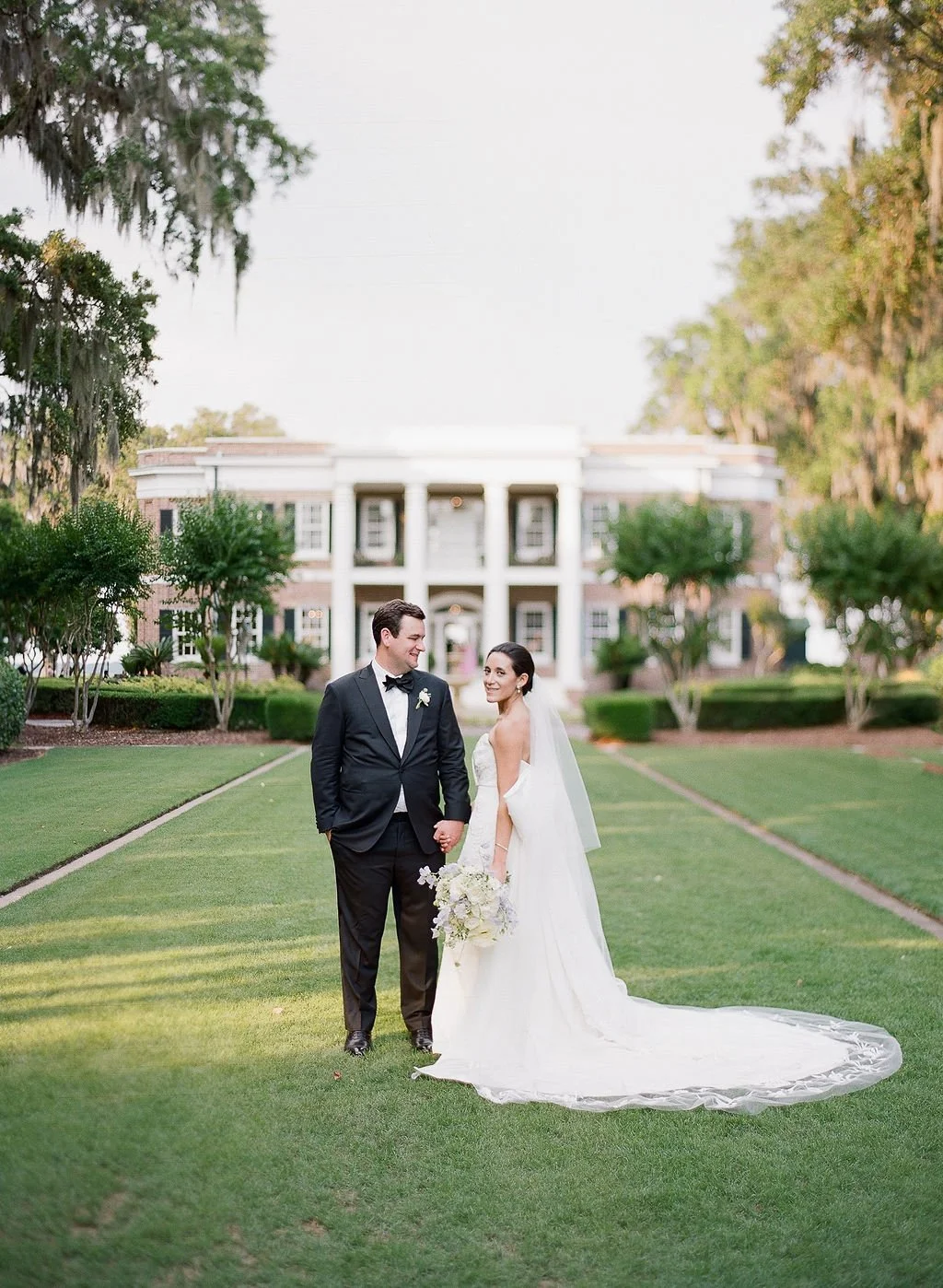
Savannah wedding venues are best suited for couples who want a destination weekend with history, walkability, hospitality, and a strong sense of place. The city offers historic squares, private gardens, museum spaces, riverfront venues, boutique hotels, and estate properties just outside downtown. The strongest Savannah weddings are planned with care around guest movement, weather, permits, hotel blocks, and the natural rhythm of the city.
Why Savannah Works for a Destination Wedding
Savannah gives guests permission to slow down.
That is rare in a destination wedding market. So many places require constant movement: long transfers, scattered hotels, complicated transportation, and events that feel disconnected from one another. Savannah’s Historic District creates a more contained experience. Guests can arrive, settle in, walk to dinner, wander through a square, and feel oriented almost immediately.
For a wedding weekend, that sense of ease is a gift.
It also creates a different kind of hospitality. The city itself becomes part of the guest experience. A welcome party does not have to work so hard when guests have already spent the afternoon under the oaks. A farewell brunch feels softer when everyone can walk over slowly, coffee in hand, rather than coordinating another shuttle.
For couples considering a stateside destination, Savannah fits beautifully within a broader U.S. destination wedding plan. It offers a sense of travel without the complexity of an international itinerary.
Walkability Is One of Savannah’s Greatest Advantages
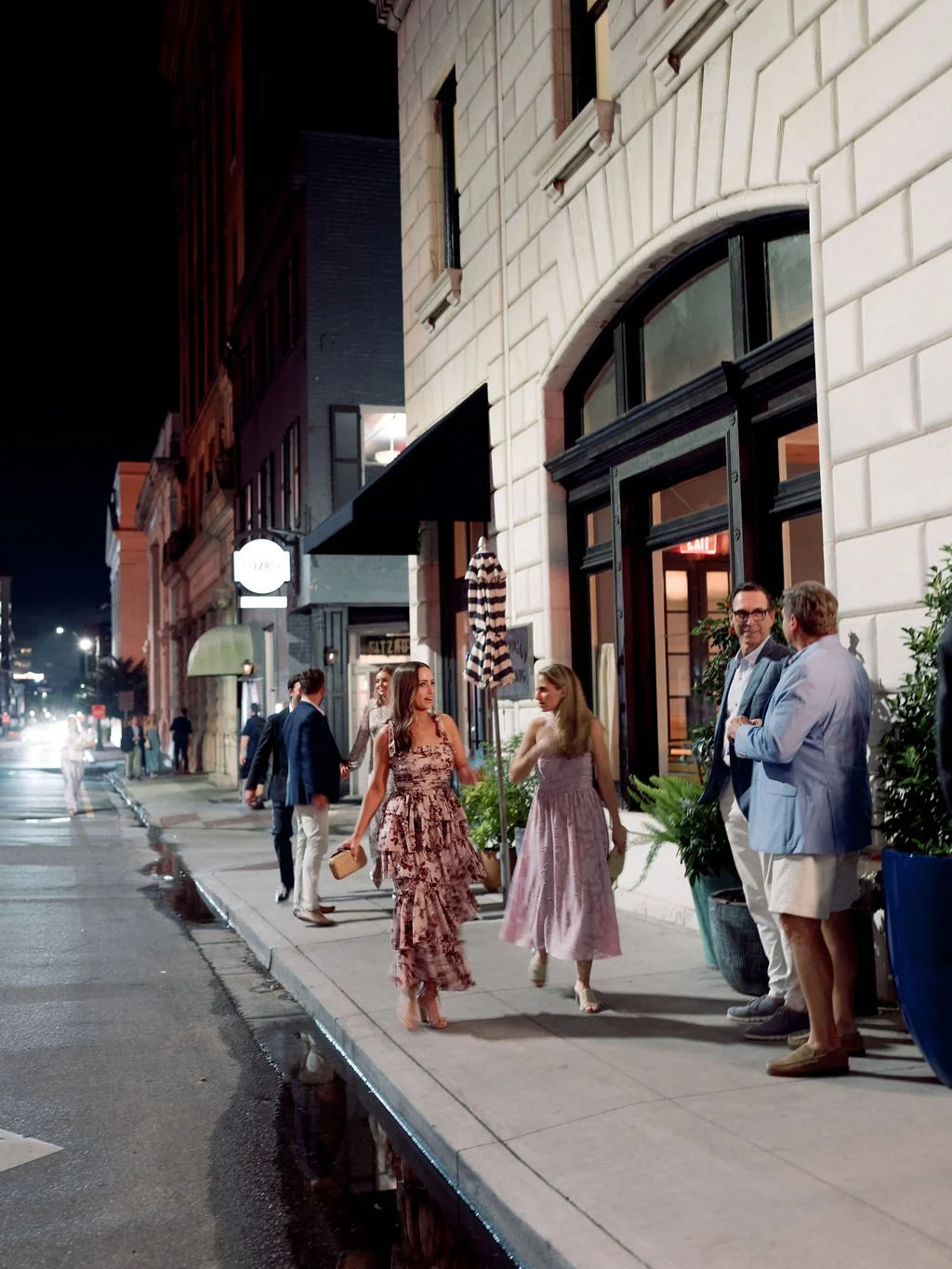
One of Savannah’s strongest qualities is how walkable the Historic District can be when the weekend is planned well.
A thoughtful hotel block, ceremony location, cocktail setting, and reception venue can allow guests to move naturally through the city. They are not waiting in long transportation lines. They are not sitting in traffic. They are not being handed a weekend schedule that feels more like a conference than a celebration.
But walkability still needs structure.
Guests need to know where they are going. They need realistic timing, attire guidance, weather notes, and a plan for anyone who may not want to walk in heels or formalwear. Older guests, family members, and VIPs may still need transportation, even if the rest of the group can easily walk.
This is where guest logistics become a form of care.
The best guest experiences usually come down to what guests never had to ask for. The water was there. The shuttle was waiting. The walk made sense. The timing felt natural. The weekend had enough guidance to feel polished and enough breathing room to feel personal.
That level of care is central to how we think about designing a seamless guest journey for multi-day weddings.
Historic Squares and Outdoor Ceremony Settings
Savannah’s historic squares are part of the city’s identity. They are shaded, quiet, architectural, and immediately tied to place. A ceremony in one of these squares can feel incredibly memorable because the backdrop is not manufactured. It is already there.
A square ceremony can be beautiful, but it should never be treated casually.
The City of Savannah typically requires permits for weddings or events in public spaces. Couples should review the city’s wedding and special event permit guidance early in the planning process.
There are also practical details to consider. Guest count, ceremony length, sound restrictions, seating, floral placement, setup time, and public access all matter. These are public spaces, even when permitted. That does not mean the ceremony cannot feel intimate. It means the plan needs to be precise.
Because ceremonies in a historic square are not the most private or controlled setting, we encourage these sites to be used for photos and save the more monumental moments for a venue where you have more control.
Historic Homes, Museums, and Garden Venues
Savannah’s historic homes, museums, and garden venues offer a quieter kind of atmosphere. These spaces often come with original architecture, garden walls, intimate courtyards, period details, and rooms that already feel layered.
They are especially compelling for couples who care about character.
A dinner beneath old trees, cocktails in a courtyard, or a ceremony framed by historic architecture can feel deeply personal. These venues do not need heavy design. They need careful editing.
The planning, however, is often more involved than it appears. Historic properties may have strict preservation rules. Vendor access can be limited. Load-in may be narrow or time-sensitive. Candles, tenting, flooring, music, catering equipment, and floral installations may all require approval.
That is not a reason to avoid them. It is a reason to plan them properly.
A historic venue should feel honored, not overtaken. The design should work with the building, not fight it. This is where experienced planning and bespoke event design matter. The goal is not to fill every corner. The goal is to understand what the space needs and what it absolutely does not.
Ballrooms and Event Spaces in the Historic District
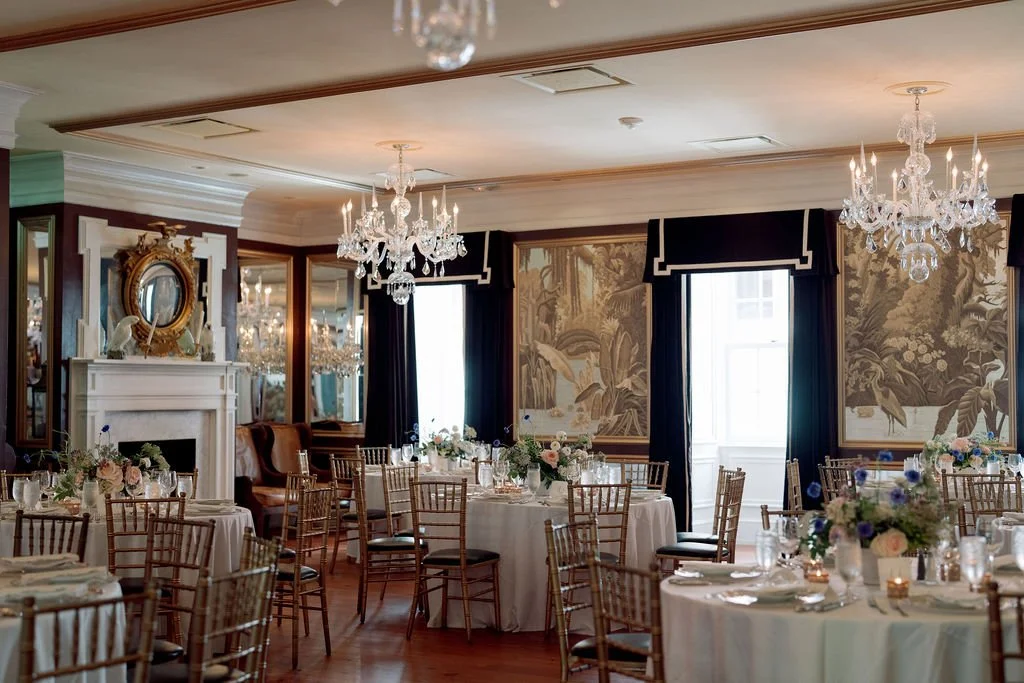
For larger guest counts, Savannah’s ballrooms and event spaces can provide the infrastructure that historic homes and gardens may not.
These venues often offer professional kitchens, stronger power access, indoor weather protection, restrooms, larger floor plans, and more flexibility for dinner and dancing. For couples planning a more formal reception, this can make the guest experience smoother.
The best ballroom weddings in Savannah still respect the setting.
If a room has old floors, tall windows, plasterwork, or architectural detail, the design should not try to erase that. A more refined approach might use tailored linens, candlelight, layered tabletop, sculptural florals, warm lighting, and thoughtful seating to bring the room forward without overwhelming it.
The question is not, “How much can we add?”
The better question is, “What will make this room feel complete?”
That distinction matters.
Riverfront and Industrial Venues
Savannah’s riverfront has a different texture from the squares and gardens. It is stronger, busier, and more architectural. Brick, timber, stone, water, and movement all shape the feeling of the area.
Riverfront and industrial-style venues can work beautifully for couples who want something less traditional while still staying connected to the city. These spaces often support larger receptions, welcome parties, late-night gatherings, and more entertainment-forward designs.
Lighting becomes especially important here. A rawer space can feel cinematic with the right lighting plan, but it can also feel cold if the atmosphere is not built intentionally. Bars, lounges, dinner placement, sound, and guest flow all need to be considered.
The riverfront can also be lively, which may or may not suit the tone of the wedding. If privacy is important, the arrival sequence, entrance points, surrounding foot traffic, and guest transitions should be reviewed carefully.
A venue can photograph beautifully and still be difficult to manage. Both things can be true. The planning process should look at the experience from every angle.
Estate Venues Outside Savannah
For couples who want more privacy, estate venues outside the city can be a strong option.
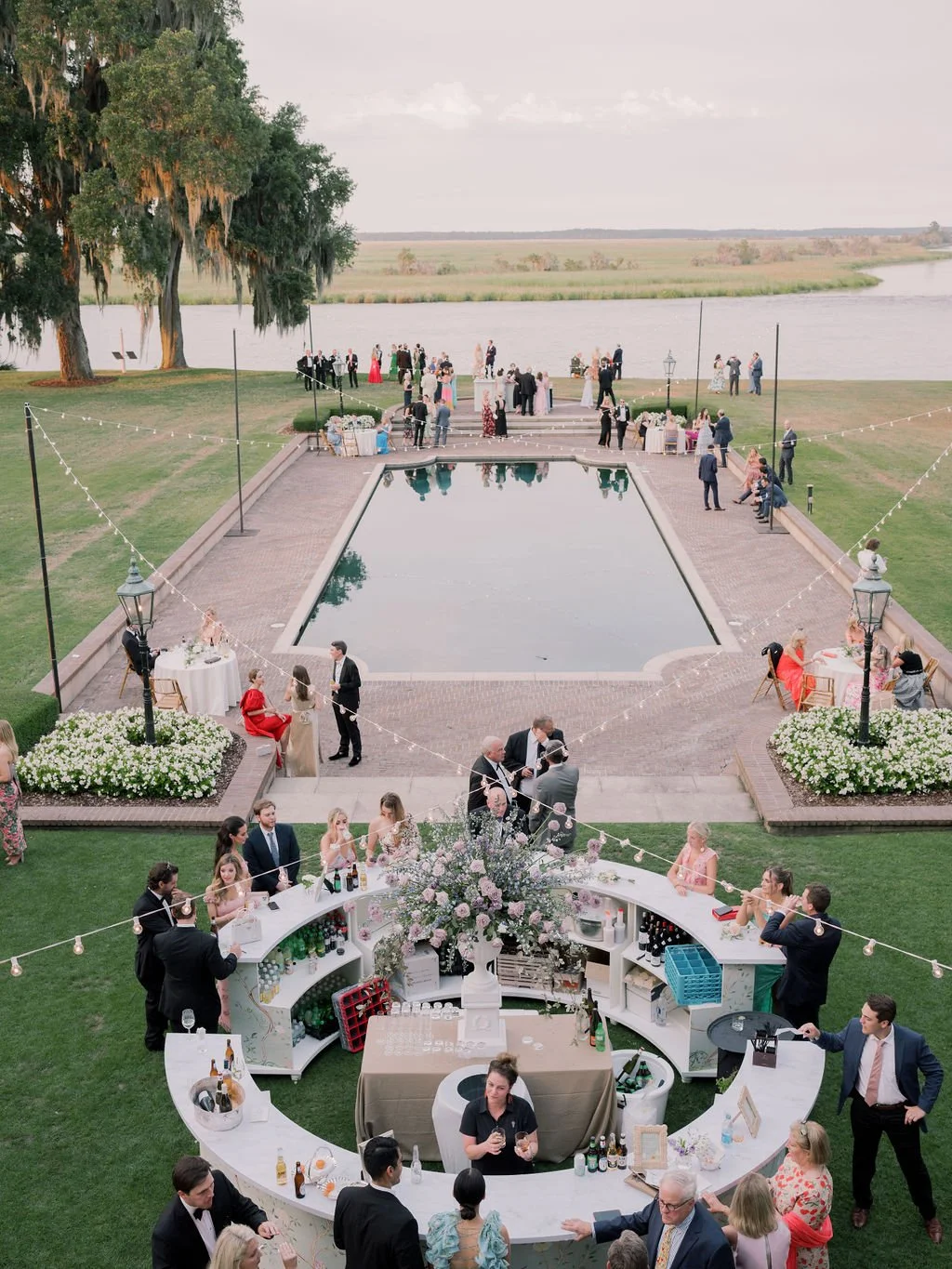
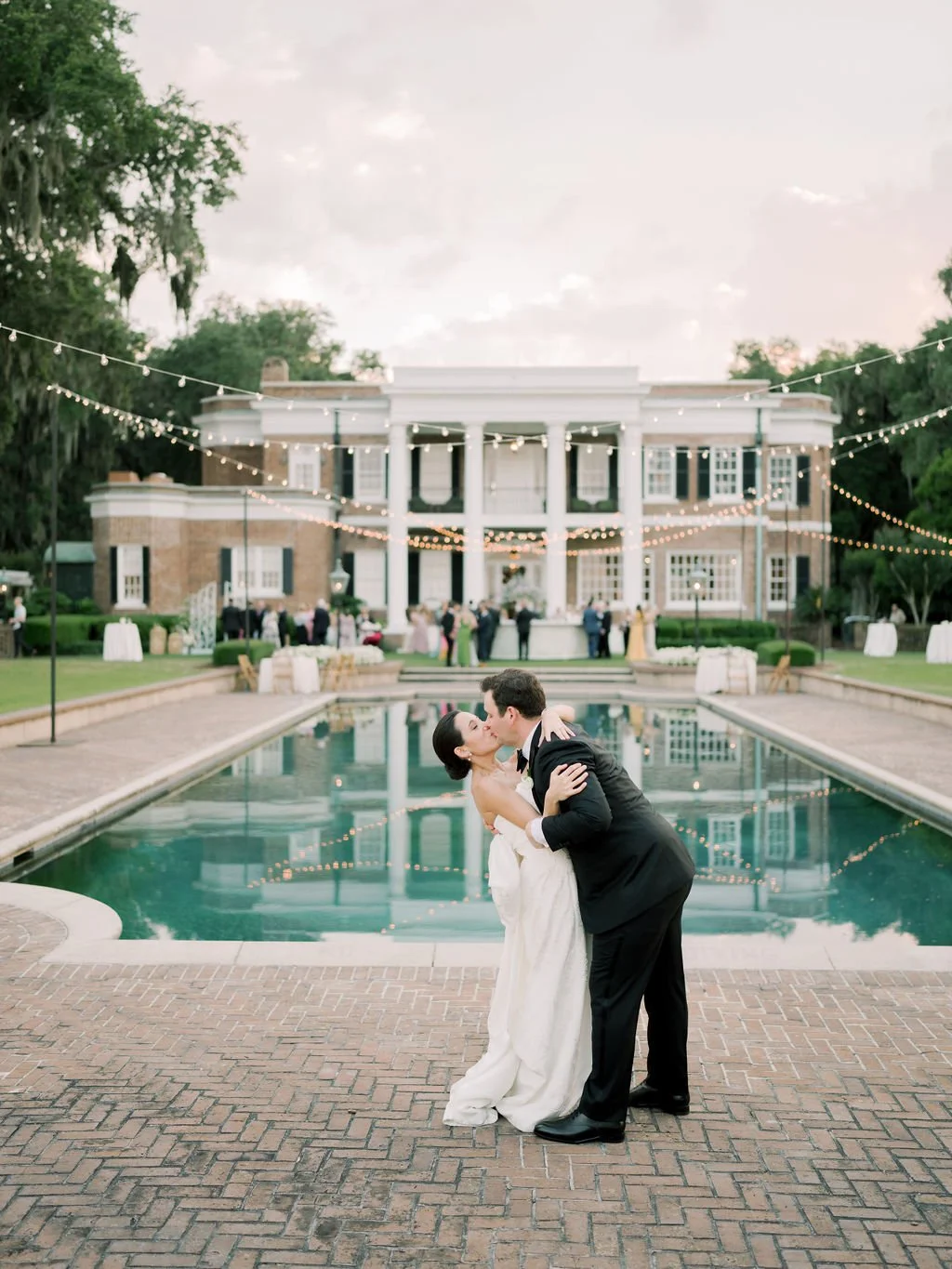
These properties may offer wide lawns, oak alleys, gardens, tenting opportunities, water views, or historic homes that allow the weekend to feel more private and removed. They can be especially appealing for couples who want a full transformation and a more controlled environment.
The trade-off is logistics.
Once guests leave the walkability of downtown Savannah, transportation becomes essential. The arrival needs to feel smooth. The departure needs to be planned. Vendors need access. Power, restrooms, catering tents, parking, lighting, flooring, weather plans, and production schedules all need to be addressed well in advance.
A private estate can feel effortless to guests, but only when the structure behind it is strong.
For the right celebration, that sense of arrival can be incredibly powerful. Guests leave the city, follow the oaks, arrive at a property that feels entirely set apart, and understand immediately that the evening has shifted into something more private.
Savannah vs. Charleston: How to Choose
Couples don’t consider Savannah and Charleston together as much as they should. The comparison makes sense. Both cities offer historic architecture, coastal influence, strong hospitality, and a Southern sense of place.
But they do not feel the same.
Charleston generally offers more venue variety, deeper hotel inventory, a larger vendor market, and more range for large-scale productions. It is often the stronger fit for couples who want maximum flexibility, a broader selection of venues, and the infrastructure to support a larger multi-day wedding. If Charleston is part of your search, our Charleston wedding planning work may be a helpful place to begin.
Savannah feels smaller and more intimate. It is less expected and not as overdone. The city works especially well for couples who want guests to feel tucked into the weekend rather than spread across several locations. Guest counts around 80 to 150 can be particularly well suited to Savannah, though larger weddings are possible with the right venue and production plan.
The decision should not come down to which city is prettier.
It should come down to how you want the weekend to feel.
If you want more infrastructure, a larger planning market, and more venue range, Charleston may be the stronger fit. If you want intimacy, walkability, and a slightly more discovered feeling, Savannah deserves serious consideration.
Planning the Flow of a Savannah Wedding Weekend
A Savannah wedding weekend works best when the schedule has intention but does not feel overworked.
The city gives guests room to wander. That should be protected.
Friday: Welcome Event
The welcome event should feel easy to attend. A rooftop cocktail party, private courtyard dinner, restaurant buyout, or riverfront gathering can all work beautifully.
This is the moment when guests settle in. They have traveled. They have checked into hotels. They are finding their bearings. The welcome event should give them warmth, direction, and a sense of what the weekend will feel like without asking too much of them.
Savannah’s open-container rules can add to the relaxed feeling of the city, but they should be understood clearly. The city allows to-go alcoholic beverages within specific boundaries and under specific rules, including cup type and size limits. Savannah’s Waterfront offers a helpful overview of the city’s to-go cup policy, and the city’s ordinance outlines the official details.
Saturday: Wedding Day
The wedding day may take place entirely at one venue or across several nearby locations. A ceremony in a church, cocktails in a garden, dinner in a ballroom, and an after-party near the river can all work if the timing is disciplined.
The mistake is trying to fill every hour.
Savannah is not a city that needs to be packed with programming. Guests should have time to explore, rest, change clothes, have lunch, sit in a square, or disappear for a drink before the next event. Overscheduling can make a wedding weekend feel like an obligation, even when every piece of it is beautiful.
A destination wedding should feel generous, not demanding.
Sunday: Farewell Brunch
The farewell brunch should close the weekend gently. It might be a hotel brunch, a private restaurant gathering, or a more coastal moment near Tybee Island for couples who want to bring in the water before guests depart.
This event does not need to be elaborate. It needs to be thoughtful.
Good coffee, something satisfying to eat, easy timing, and a warm goodbye are often enough.
Weather, Seasonality, and Guest Comfort
Savannah’s weather should be part of the planning conversation from the beginning.
Spring and fall are generally the most comfortable seasons for outdoor events. Summer weddings can be done, but they require more care around timing, shade, hydration, airflow, climate control, and floral choices.
When planning an outdoor ceremony, think beyond the ceremony start time. When will guests arrive? How long will they be seated? Will they be in direct sun? Is the ground even? Are there fans, cool towels, water stations, parasols, or shaded areas nearby? How quickly can guests move from ceremony to cocktails?
These are not fussy details. They are the guest experience.
Rain plans should also be treated as real plans. Not backup plans that live in a folder until everyone panics. Tents, sidewalls, flooring, drainage, umbrellas, covered walkways, revised vendor routes, and guest communication should be addressed early.
For more on that approach, our guide to rain plans that actually work is a useful companion piece.
Hotel Blocks and Guest Accommodations
Savannah has beautiful boutique hotels and historic properties, but the room inventory is more limited than larger destination cities. Hotel blocks should be secured early, especially during peak spring and fall dates.
The hotel strategy should support the weekend flow.
If events are walkable, a central hotel block can make the experience feel contained and easy. If the wedding takes place at an estate outside the city, guests may still prefer staying downtown, but transportation needs to be planned with care.
Couples should also think about the different needs of their guests. Some will want a full-service hotel. Others may prefer a smaller inn or private rental. The recommendations should be clear, organized, and practical.
The goal is to remove guesswork.
Guests should know where to stay, how to get around, what to wear, when to arrive, and how the weekend will unfold. Clear communication is one of the simplest ways to make guests feel cared for before they ever arrive.
Travel and Airport Logistics
Savannah/Hilton Head International Airport is convenient for a destination wedding weekend, with nonstop service to a number of major U.S. cities listed on the airport’s airlines and nonstop destinations page.
For many guests, this makes Savannah easier than a remote domestic destination or international wedding. Still, travel guidance should be proactive.
Guests should receive arrival recommendations, transportation options, hotel information, attire notes, and the weekend schedule well before they pack. VIP guests, immediate family, and the wedding party may benefit from private airport transfers, especially if they are arriving close together.
That first arrival touchpoint matters. After a day of travel, people appreciate being guided.
Food, Beverage, and Local Flavor
Savannah’s culinary identity is one of the loveliest parts of hosting a wedding weekend there.
The goal is not to make the menu feel themed. It is to let the place appear naturally. Local oysters at the welcome party. Shrimp and grits at brunch. Pralines in a welcome gift. Seasonal produce on the dinner menu. A cocktail that nods to the city without becoming too literal.
Food and beverage should feel generous, polished, and specific.
Guests remember whether the first drink was easy to get. They remember if dinner was paced well. They remember if the late-night food arrived at the right moment. They remember if their dietary restriction was handled quietly and correctly.
Service is not just what is served. It is how considered people feel while it is happening.
The Reagan Events Approach to Savannah Weddings
Our approach to Savannah is the same approach we bring to destination weddings across the Southeast, the U.S., and abroad: honor the place, protect the guest experience, and build the celebration with calm, precise structure.
We begin with how the couple wants the weekend to feel. Private or lively. Historic or modern. Walkable or estate-based. Formal or relaxed. Once that direction is clear, the venue search, vendor team, design plan, guest logistics, and production schedule can all begin to take shape.
As a full-service destination wedding planner, Reagan Events manages both the visible and invisible layers of the weekend. Venue scouting, vendor curation, budget strategy, design origination, transportation, guest communication, timelines, floor plans, production schedules, and onsite execution all work together.
Savannah rewards that level of care.
The city has atmosphere built in. Our job is to make sure the celebration feels effortless within it.
Frequently Asked Questions About Savannah Wedding Venues
What is the best time of year to get married in Savannah?
Spring and fall are generally the most comfortable seasons for a Savannah wedding. March, April, May, October, and November are especially appealing because the weather is milder and outdoor events are more comfortable. Couples should be mindful of major city weekends, especially St. Patrick’s Day, when hotel availability, traffic, and crowds can significantly affect the guest experience.
Can you have a wedding ceremony in a Savannah square?
Yes, certain Savannah squares may be used for wedding ceremonies, but permits are typically required for events using chairs, aisle runners, tents, tables, or other decor. Couples should review the City of Savannah’s wedding permit information early and work with a planner who understands public-space logistics. We recommend using Savannah squares for photos and holding your ceremony in a location where you have more control of the privacy and setting.
Is Savannah a good destination for a multi-day wedding?
Yes. Savannah is especially well suited for multi-day weddings because of its walkability, historic setting, restaurant scene, boutique hotels, and variety of event spaces. A thoughtful weekend might include a welcome party, wedding day, and farewell brunch, with enough downtime for guests to enjoy the city.
How does Savannah compare to Charleston for a destination wedding?
Charleston generally offers more venue variety, deeper hotel inventory, and a larger vendor market. Savannah offers a smaller, more intimate, and walkable experience. Charleston may be better for larger-scale productions, while Savannah can be ideal for couples who want a more tucked-in Southern destination weekend.
Do Savannah weddings require guest transportation?
It depends on the venue plan. Weddings within the Historic District may allow guests to walk between hotels and events, but transportation should still be considered for older guests, formal attire, weather, and late-night returns. Estate venues outside downtown will almost always require organized guest transportation.
How far in advance should couples plan a Savannah wedding?
For a high-touch destination wedding in Savannah, 12 to 18 months is a strong planning window. This allows time to secure venues, hotel blocks, permits, vendor teams, transportation, and production details, especially during peak spring and fall dates.
Planning a Savannah Destination Wedding With Reagan Events
A Savannah wedding should feel rooted in the city without becoming overly themed. It should give guests room to enjoy the destination while still feeling guided, cared for, and fully considered.
Whether you are drawn to a square ceremony, a candlelit historic home, a riverfront reception, or a private estate weekend, the strongest celebrations begin with clear direction.
Explore the Reagan Events portfolio, learn more about our planning process, or inquire with Reagan Events to begin shaping a destination wedding weekend in Savannah, Charleston, or beyond.