
Band vs. DJ for a Luxury Wedding: How to Decide
A reception can be beautifully designed and still feel flat by 9:15.
That almost always comes back to energy. Music carries the room. It affects the pace of dinner, the confidence of the dance floor, the way transitions feel, and how long guests stay fully engaged. When couples ask us about band vs DJ wedding decisions, they are usually asking something deeper: what kind of night are we actually trying to create?
Because this choice is rarely about one being better than the other. It is about what fits your crowd, your venue, your priorities, and the kind of wedding reception entertainment that will feel most natural for your celebration.
When a couple is torn between a band and a DJ, the first thing I want to understand is why they are leaning one way. Is it because they love the sound of a live performance? Or is it because they are worried a band will not perform their favorite songs the way they want to hear them? Once we understand what is really driving the decision, it becomes much easier to point them in the right direction.
The Case for a Live Wedding Band
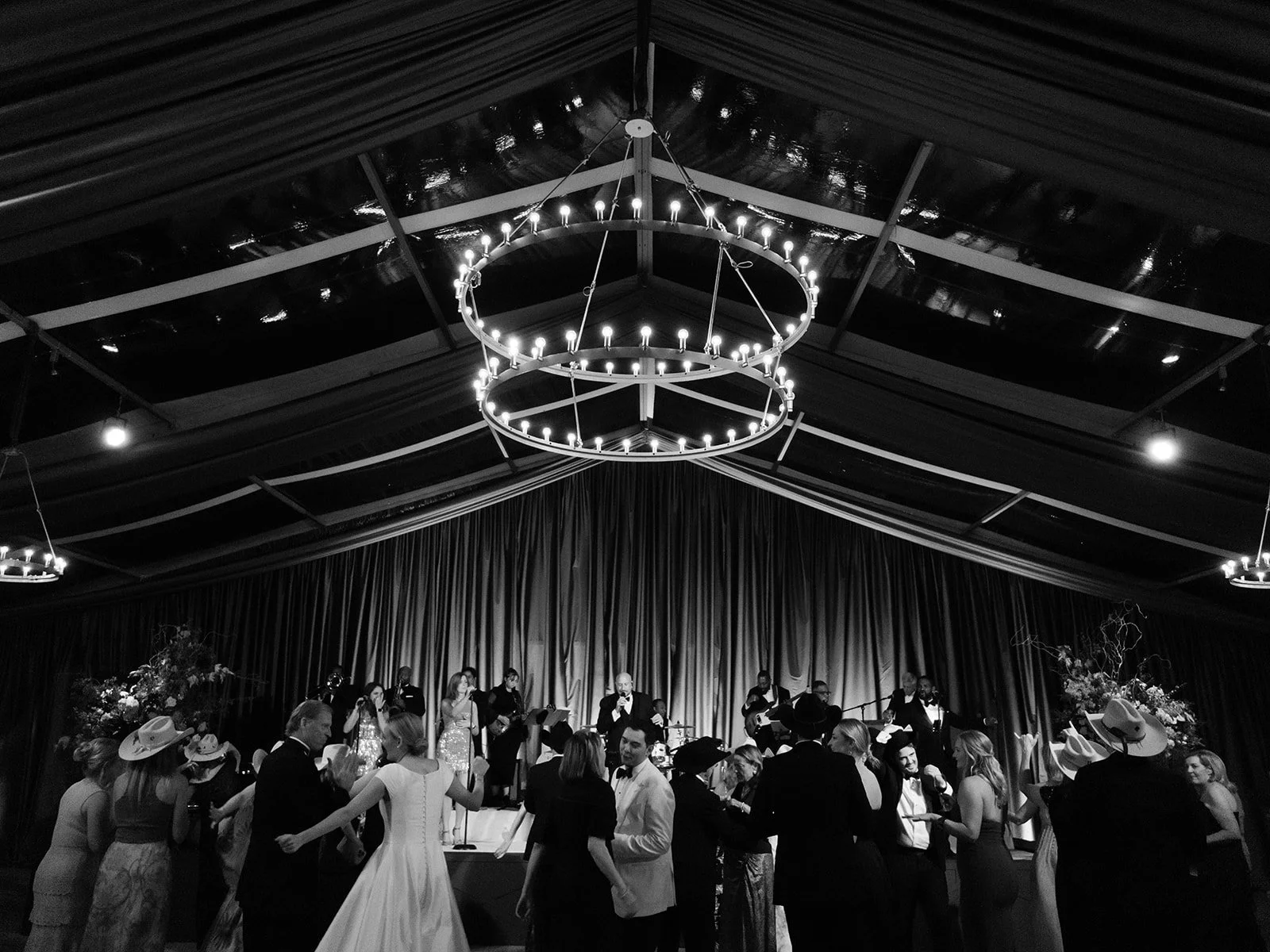
There is a reason a live band still holds so much appeal. A strong band does not simply play music. They create a focal point in the room.
You feel it the moment the reception opens up and the stage comes alive. There is movement, personality, and a certain electricity that comes from people performing in real time. That visual presence matters. It gives the room a pulse. It turns music into part of the experience, not just part of the background.
For larger celebrations especially, a live band for wedding reception dancing can feel expansive in a way that is hard to replicate. A ten or twelve-piece band has weight. It fills a tent beautifully. It suits a black-tie setting. It can make the evening feel grand without needing much explanation.
But there is also a wide range between a good band and an exceptional one. An exceptional band knows how to build a night. The set is carefully shaped. Songs blend into one another. Singers rotate so the whole stage does not go dark all at once. The energy rises intentionally instead of starting too hard and fading too early. Most importantly, the band reads the crowd. They know when to lean nostalgic, when to bring in something current, and when to keep the momentum pressing forward.
That is the difference guests feel, even if they could never name it out loud.
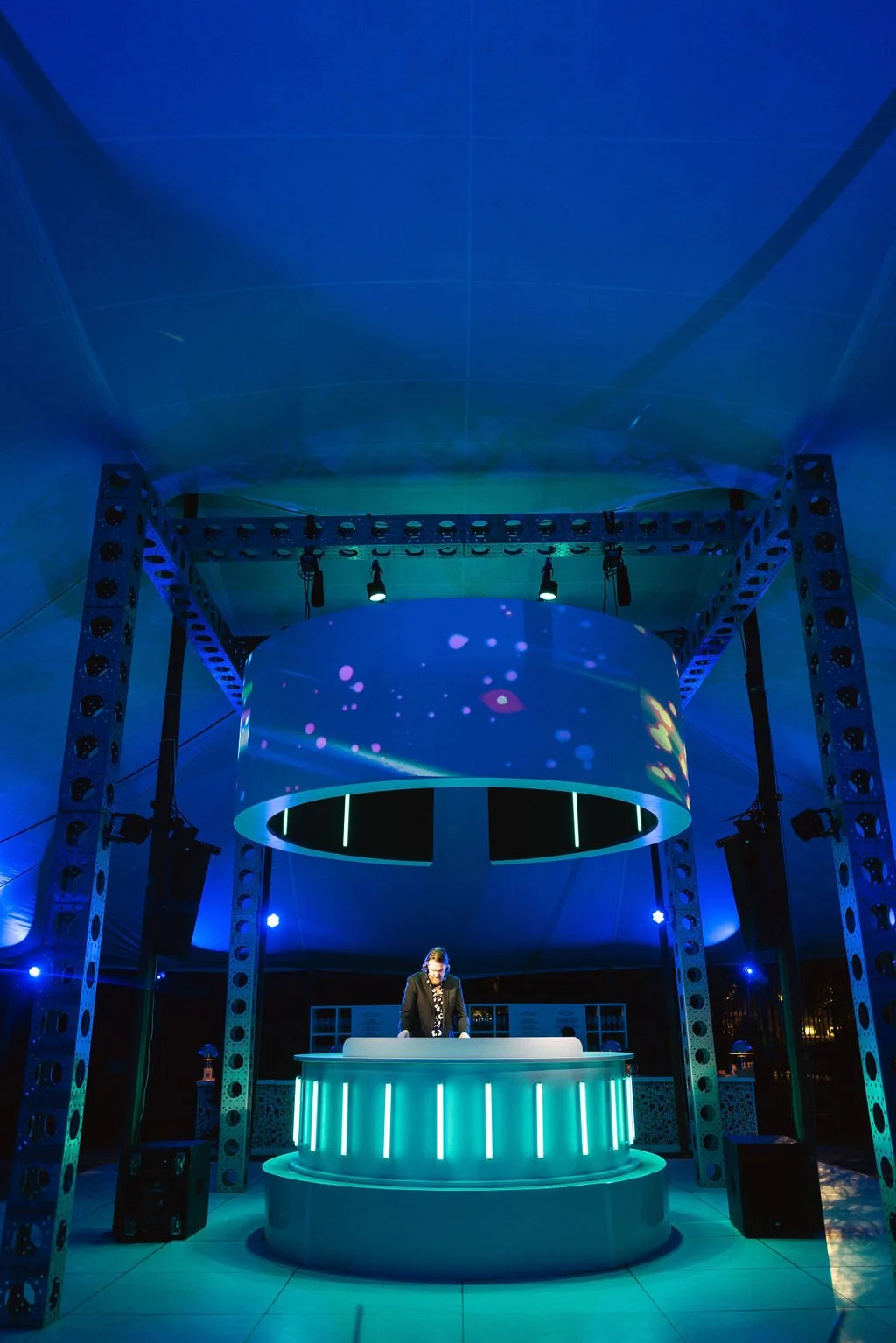
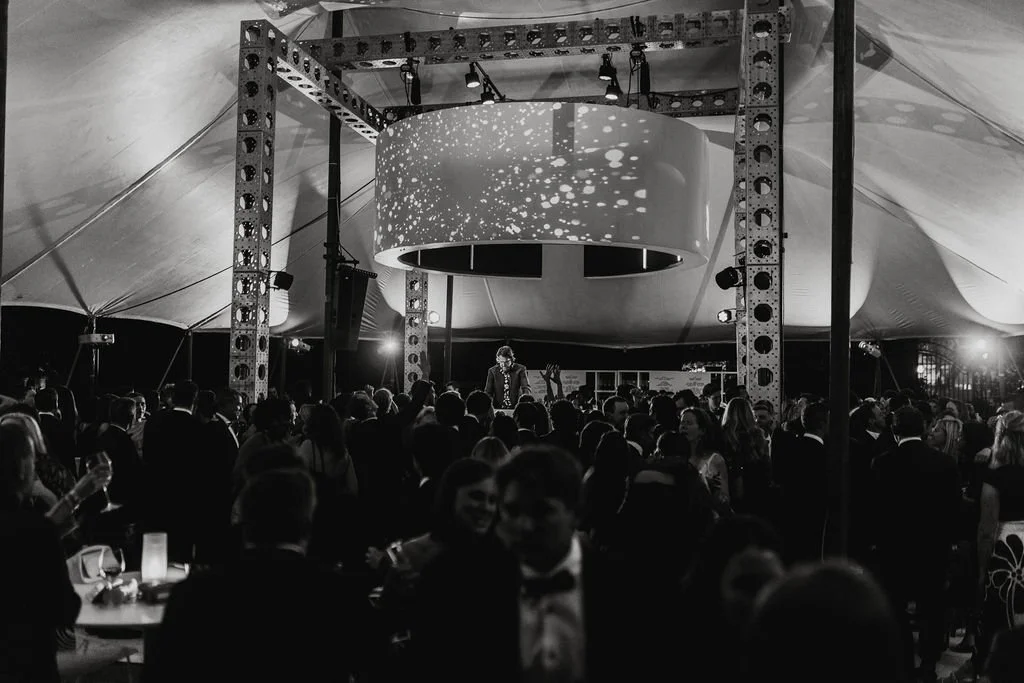
The Case for a Wedding DJ
For years, some couples treated DJs like the practical option and bands like the elevated one. I do not think that distinction holds up anymore.
A great DJ brings something entirely different to the table, and in many cases, exactly what a reception needs. If your priority is hearing the original version of the songs you love, a DJ has the advantage. If you want to move seamlessly from Motown to 90s hip-hop to current dance music without interruption, a DJ does that beautifully. If you want the dance floor to stay active without set breaks, a DJ makes that easier too.
That continuity matters more than people realize. One of the quickest ways to lose a room is to let the energy drop at the wrong moment. Bands need breaks. That does not make them a poor choice, but it does mean those pauses have to be managed well. A DJ can keep the room moving straight through.
There is also the matter of space. A DJ generally has a smaller footprint, fewer infrastructure needs, and more flexibility with layout. For intimate venues, historic properties, or spaces with tighter restrictions, that can be a major benefit. Sometimes the more elegant choice is simply the one that works with the room instead of against it.
And in the sophisticated wedding space, the perception of DJs has changed considerably. More and more couples are choosing them. Part of that is taste shifting. Part of it is practicality. But a large part is that today’s best DJs are highly curated, musically intelligent, and far more dynamic than the old stereotype suggests.
The Hybrid Approach: DJ + Live Instruments
This is where things get especially interesting.
If a couple loves the range and continuity of a DJ but still wants some live performance woven into the night, the hybrid approach can be an excellent answer. A DJ paired with live musicians gives you the original tracks, the broad genre flexibility, and the clean pacing, while also layering in visual interest and live energy.
We have been leaning into this more. It can mix things up in a way that keeps the night from feeling one-note. A roaming saxophonist during cocktails or dinner adds a wonderful point of interest. A percussionist can shift the feel of the dance floor and give it more lift. Even a smaller live addition changes how the entertainment is experienced in the room.
That is often what couples are after, whether they realize it at first or not. They want variety. They want momentum. They want the night to keep evolving.
A hybrid format can do that especially well.
Venue and Logistical Constraints
Sometimes the venue answers the band vs DJ wedding question for you.
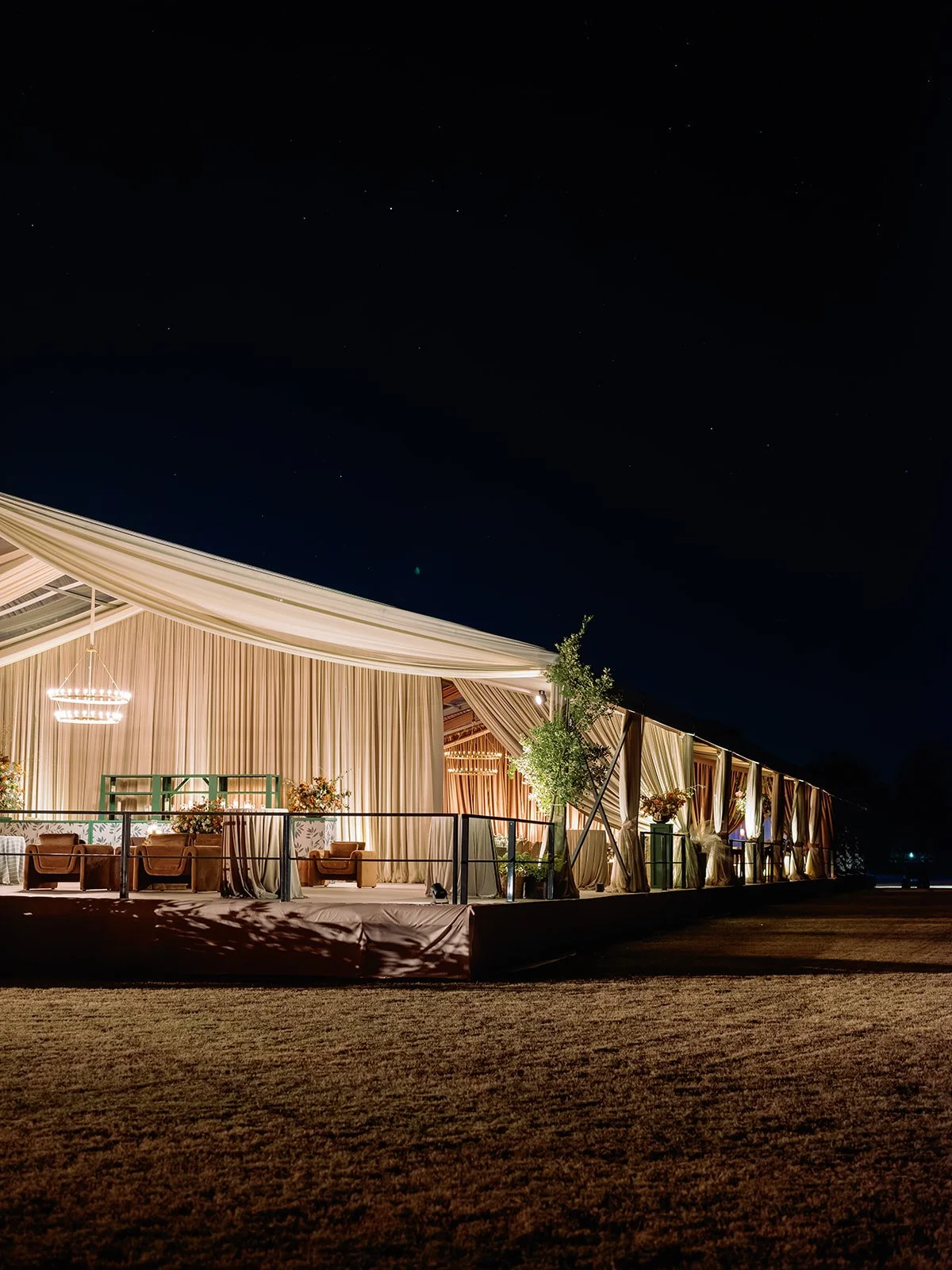
A large band needs more than a stage and a microphone. It needs space for performers, sound equipment, staging, power, and often a green room. It needs vendor meals. It needs a realistic load-in and load-out plan. In some properties, particularly private estates and historic venues, those logistics are not small details. They are decision-makers.
Sound is another major factor. Some venues simply cannot support the volume of a full band indoors. We have worked in spaces where valuable artwork limited where amplified music could go, which meant dancing had to move outside. That may be completely workable in the right setting. But if the outdoor footprint does not suit the guest count or the overall vision, then the venue itself may no longer be the right fit.
This is why entertainment should never be selected in a vacuum. Your music choice touches layout, guest flow, staffing, power, noise ordinances, and the overall design of the reception. It is one of those decisions that seems creative on the surface but is deeply logistical underneath.
Budget Considerations
Couples often ask whether a live band is always more expensive than a DJ.
Usually, yes. But the real answer deserves more context.
A premium band is not just a music line item. It often includes a larger roster of talent, more travel, lodging for destination events, rider requirements, staging, production, and more robust sound support. The cost reflects the scale.
That said, a premium DJ is not a budget shortcut in the way some people assume. There is a real difference between a great DJ and an average one, and that difference shows up fast on a dance floor. A strong DJ knows how to pace a night, mix confidently, read the room, and create a sound that feels layered rather than flat. That level of skill comes at a cost too.
So yes, there can be meaningful savings with a DJ. But the better way to think about it is this: entertainment is one of the most felt investments of the night. Guests may not know your floral count or linen source, but they will absolutely feel whether the reception had a pulse.
How to Choose Wedding Music for Your Reception
When couples ask me how to choose wedding music, I usually bring them back to a few simple questions.
How important is live performance to you? If you want the band itself to feel like part of the show, that matters. Some couples light up at the idea of singers, horns, and stage presence. Others care far more about hearing the exact songs they love.
What kind of crowd are you hosting? A broad age range with varied musical tastes often benefits from the flexibility of a DJ. A crowd that loves performance and will respond to a charismatic front person may thrive with a band.
What does the venue comfortably support? Not theoretically. Comfortably. There is a big difference.
How important is nonstop momentum? Some receptions can absorb breaks gracefully. Others lose steam fast and need continuity.
What are you willing to prioritize in the budget? Entertainment is often worth protecting. If dancing and atmosphere are central to the night, this is not the place to get casual.
This is also where planning becomes so important. The right entertainment choice is rarely made by comparing websites or watching a few Instagram clips. It is made by understanding the event as a whole. This is the same reason reception flow matters so much, and why conversations around music pair naturally with pieces like How to Build a Wedding Day Timeline That Keeps the Energy Right (Link TBA). If you do choose a band, Managing the Band Like a Pro is equally relevant, because the performance is only one part of what keeps the night moving well.
The Right Choice Is the One That Supports the Night
There is no universally correct answer in the wedding DJ vs live band conversation.
A band can be thrilling, immersive, and unforgettable. A DJ can be sharp, stylish, versatile, and every bit as effective. A hybrid approach can offer the best of both in the right setting.
The goal is not to choose the option that sounds most impressive on paper. It is to choose the one that will make your reception feel the way you want it to feel when the room is full, the lights are low, dinner has ended, and the night is finally opening up.
That is where experience matters. Entertainment affects so much more than the playlist. It shapes the guest experience from the inside out.
If you are weighing the decision between a band and a DJ and want guidance that accounts for the full picture, from venue logistics to guest energy to overall flow, Reagan Events would be honored to help you shape a celebration that feels as good as it looks.
If you’d like to talk with us about planning your next event, click here.
Want more behind-the-scenes stories, trends, and inspiration?
Subscribe to our newsletter for inspiration, updates, and expert advice.
Follow us on Instagram and TikTok for behind-the-scenes moments, trending ideas, and so much more.
Tune in to our Wine and Dine Me Podcast on Apple Podcasts and Spotify, where we explore all things weddings, life, and business.
FAQs
Is a live band always more expensive than a DJ?
Usually, yes. A live band typically involves more performers, more production, and more logistical support. But a highly sought-after DJ is still a significant investment, and a strong one is worth it.
Do wedding bands take breaks during the reception?
Yes, most do. The best bands manage those breaks strategically by rotating vocalists, using smart set structure, or coordinating with production so the energy does not fully disappear.
Can a band learn a specific song for our first dance?
Often, yes. Many bands will learn one or two special songs if requested in advance. It is always best to confirm this early so expectations are clear.
Are DJs appropriate for formal weddings?
Absolutely. A well-curated DJ can feel polished, current, and highly sophisticated. Formality is not determined by whether music is live. It is determined by the quality of the talent and how well the experience is produced.
What if we want both a DJ and live music?
That can be an excellent solution. A DJ paired with live instruments can give you versatility, continuity, and added energy without the full footprint of a large band. Alternatively, a live band can be the reception headliner and a DJ can carry the party into the late night hours.