
The Cooper Wedding Guide: Charleston’s New Waterfront Address
Charleston has always been a city of layers. Old brick and salt air. Church bells in the distance. Streets that invite you to wander rather than rush. There is a sense that everything has been here longer than we have, and that history is part of what makes hosting here feel so distinct.
The arrival of The Cooper adds something entirely different to the city.
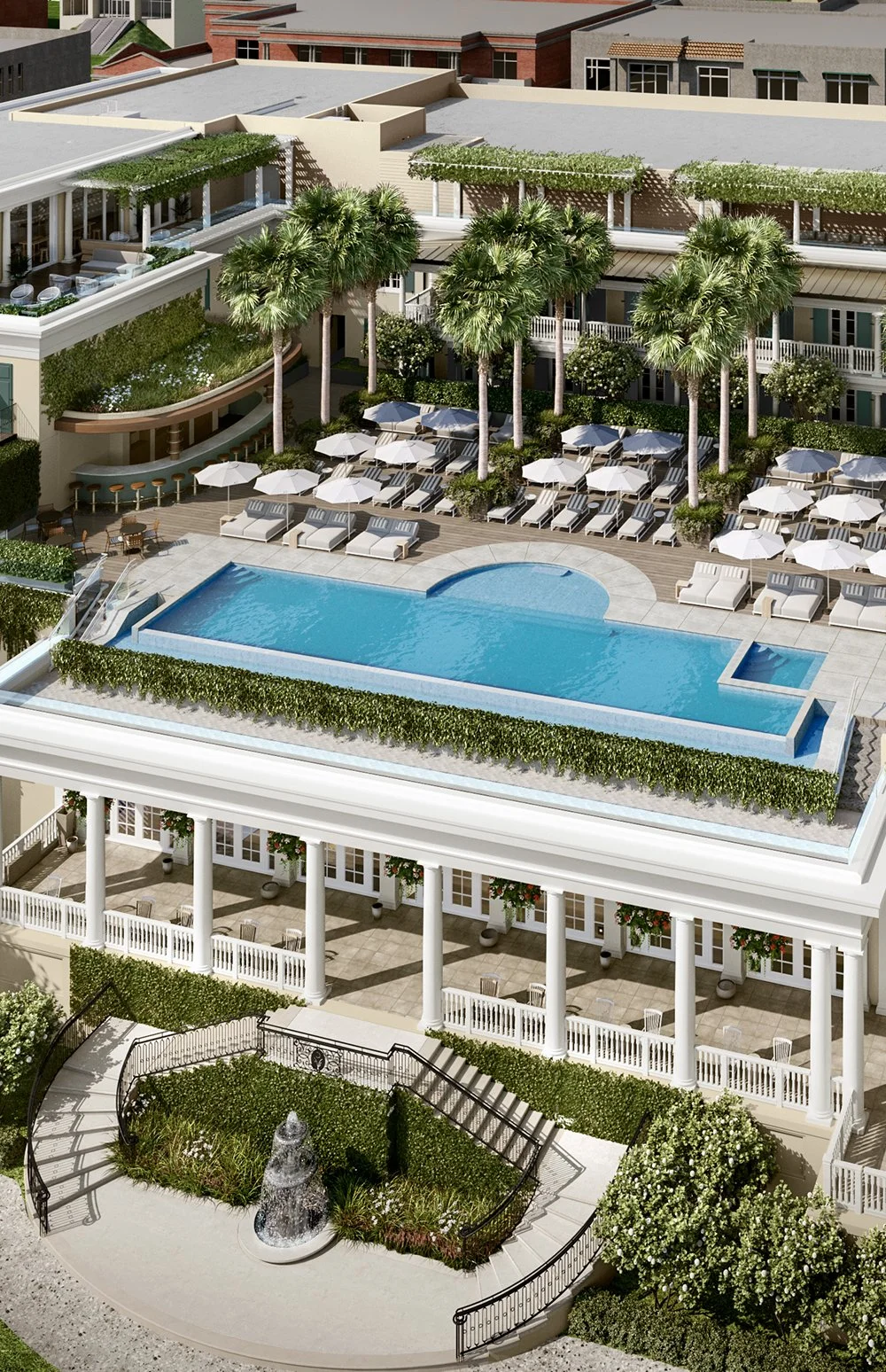
Opened in March 2026, The Cooper sits directly on Charleston Harbor at 176 Concord Street, beside Waterfront Park. With 191 rooms and suites, waterfront gathering spaces, restaurants, a marina, a rooftop pool, and direct access to downtown Charleston, the hotel gives couples something that has historically been difficult to find on the peninsula: the ability to build a cohesive wedding weekend around one central property.
For couples planning a destination celebration, that matters.
A strong wedding weekend should feel easy to the people attending it. Guests should understand where they are going. They should have time to settle in. Transportation should not become the defining feature of the itinerary. And every transition should feel like it was considered before anyone arrived.
As a Charleston wedding planning team, that is what makes The Cooper particularly interesting to us.
Quick Answer: Is The Cooper a Good Charleston Wedding Venue?
For couples who want to host a multi-day Charleston wedding with accommodations, waterfront events, dining, and much of the guest experience centered around one property, The Cooper offers a compelling new option.
Its strongest advantage is not simply the harbor setting. It is the ability to create continuity throughout the weekend. Guests can arrive, settle into the hotel, attend multiple events without constant transportation, enjoy Charleston during open portions of the itinerary, and return to the same central gathering place.
That combination can make a destination wedding feel far more relaxed without making it feel contained.
Why The Cooper Is Different for a Charleston Wedding Weekend
Most Charleston weddings require movement.
That can be part of the experience. A ceremony in one part of the city, dinner somewhere else, a welcome party tucked into another historic property. Charleston rewards couples who use the city well.
But movement also has a cost.
Every transfer requires transportation, timing, communication, staffing, and contingency planning. Add summer heat, formal attire, grandparents, children, traffic, unfamiliar streets, and guests who may have had a long travel day, and the logistics begin to shape how the weekend feels.
The Cooper gives couples another option.
With 191 rooms and suites and several gathering spaces on property, the hotel can function as the weekend's anchor. Guests can check in, unpack once, understand their surroundings, and move through the celebration with fewer logistical interruptions.
Fewer transfers create cleaner pacing. Cleaner pacing creates more room for people to actually enjoy themselves.
And that is usually what guests remember.
The Beemok Hospitality Collection Connection
The Cooper is part of Beemok Hospitality Collection, whose Charleston portfolio also includes The Charleston Place, Sorelle, The Riviera Theater, and American Gardens.
For us, that connection matters less as a name and more as an operational consideration.
A sophisticated wedding weekend depends on hundreds of small handoffs. Arrival. Luggage. Rooming lists. Food and beverage. Transportation. Special requests. Dietary restrictions. Timing. Guest questions. Weather decisions. Private-event access.
The smoother those handoffs are, the less the guest notices the machinery underneath the experience.
That is hospitality.
The Cooper also gives couples opportunities to expand the weekend beyond the property while remaining within the larger BHC collection. A rehearsal dinner or private gathering at Sorelle, for example, can introduce a completely different atmosphere while still feeling connected to the broader Charleston experience.
The goal should never be to fill every hour with programming. The goal is to create enough variety that each event feels distinct while the weekend still reads as one story.
The Cooper Wedding Event Spaces
The Cooper's strongest wedding spaces offer something we always look for when designing multi-day celebrations: contrast.
You want each portion of the weekend to have its own identity.
The ceremony should not feel like dinner.
Cocktails should not feel like a hallway between two larger moments.
Dinner should evolve as the evening progresses.
And when guests move from one space to another, they should feel that shift.
The Grand Lawn
The Grand Lawn sits directly along the waterfront, surrounded by landscaped greenery with Charleston Harbor as the backdrop.
This is the kind of space where restraint matters.
When the setting is already strong, there is no reason to compete with it. We would approach ceremony design architecturally, using florals and structures to frame the horizon rather than conceal it.
Sightlines matter. So does the aisle.
A ceremony aisle should do more than get everyone from one end of the lawn to the other. Its width, floral placement, music, pacing, and orientation determine how guests experience those first few minutes.
And because this is Charleston, weather planning belongs in the conversation from the beginning.
Waterfront events introduce wind, heat, humidity, and the possibility of fast-moving weather. A contingency plan should be developed alongside the original design, not added once rain appears in the forecast.
A strong weather plan protects both the design and the guest experience.
The Asten Ballroom
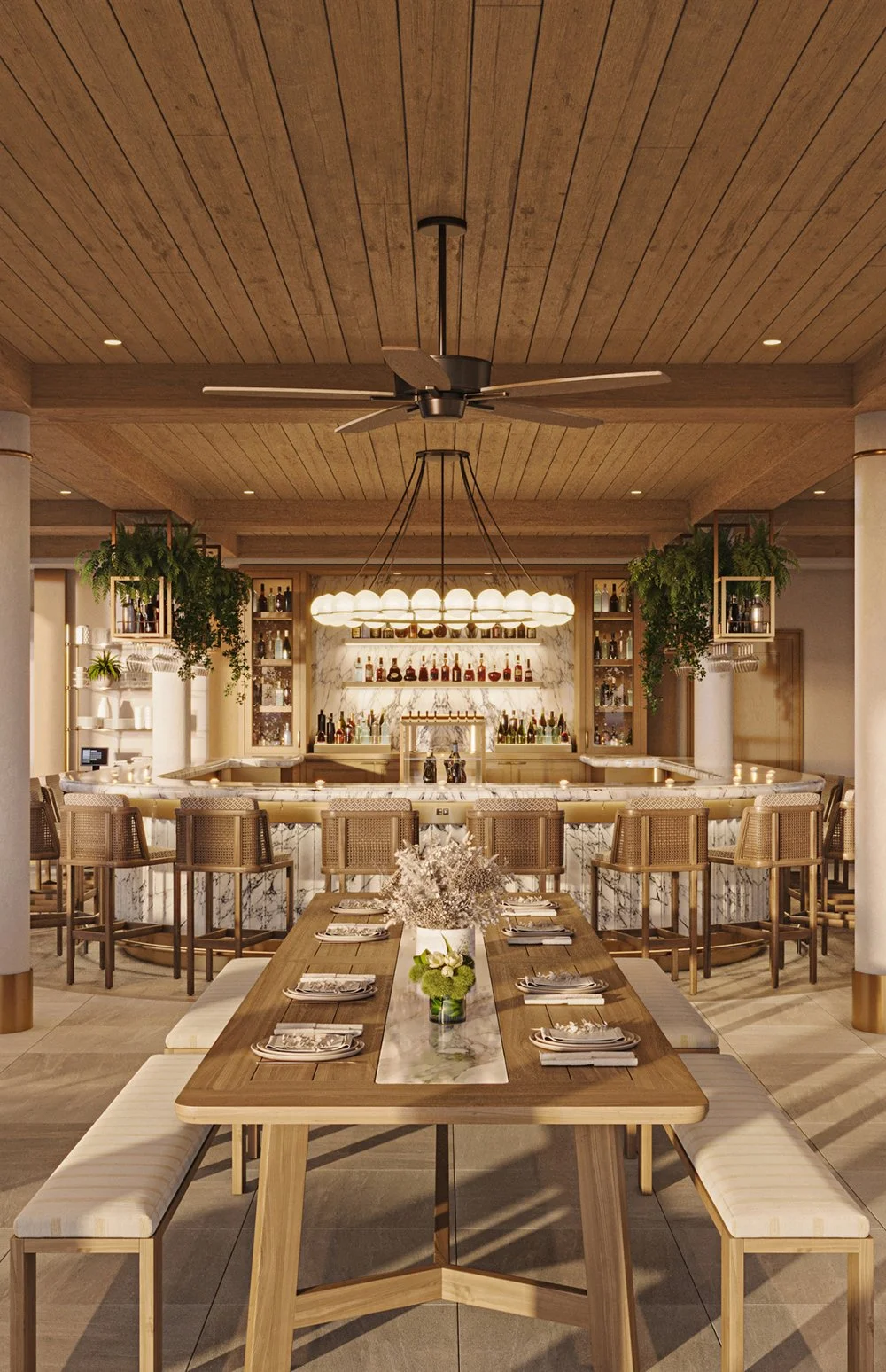
The Asten Ballroom gives couples a substantial indoor setting for dinner and dancing, supported by pre-function space and a private waterfront terrace.
That combination is particularly valuable.
Cocktail hour should feel like part of the evening rather than a waiting period. Pre-function space and a terrace give guests somewhere to move, gather, step outside, find a drink, and take a breath before dinner.
Inside the ballroom, we would focus heavily on atmosphere.
The architecture gives you the foundation. From there, bespoke event design can soften, reshape, or completely transform the space depending on the direction of the wedding.
Drapery can control sightlines and add texture. Lighting can change the emotional temperature of the room throughout the evening. Linen, candlelight, floral scale, furniture, and tabletop details can give the ballroom a more residential quality.
Most importantly, the floor plan has to work.
A beautiful room that makes service difficult is not a successful design.
The bar should be easy to reach. Servers need clear paths. Guests should not feel trapped behind tables. Toasts should be visible. The band and dance floor need enough presence to shift the energy after dinner.
The room should carry momentum from cocktails to dinner to dancing without making guests feel like the evening keeps stopping and restarting.
Beyond Weddings: Other Ways The Cooper Can Be Used
Although The Cooper is particularly compelling for multi-day weddings, the same characteristics that make it work for a wedding weekend also make it worth considering for other large-scale gatherings.
A waterfront lawn, ballroom, guest accommodations, restaurants, and multiple environments within one property give producers room to create entirely different experiences over the course of an event.
For companies, that could mean thoughtful corporate event planning that moves from meetings or presentations into dinner, entertainment, and hospitality without making guests spend the day in transit.
For consumer-facing companies, the property can also lend itself to brand event production, where arrival, environment, food, entertainment, and visual storytelling need to feel connected to a larger brand point of view.
And for milestone birthdays, anniversary celebrations, family gatherings, or intimate dinners, our approach to private event planning follows the same principle we bring to weddings: understand how people will experience the event first, then design around that experience.
The occasion changes. The standard of hosting does not.
Designing a Wedding at The Cooper
The water is already doing a great deal of the visual work here.
Our approach would begin by deciding where the design needs to speak and where it needs to stay quiet.
On the lawn, the harbor may be the dominant visual.
In the ballroom, we have more opportunity to create a world of our own.
At a welcome event, the design may become looser and more social.
By the after-party, the entire tone can shift again.
That progression is what makes a multi-day wedding interesting. Everything does not need to match. It needs to relate.
The colors may evolve. The flowers may change. The music certainly should. Dinner on Friday should not feel like a preview of Saturday night.
A well-produced wedding weekend gives guests multiple experiences while maintaining one clear point of view.
Guest Experience Should Drive the Weekend
This is where The Cooper has the potential to be especially strong.
A wedding weekend should feel generous because it is clear and easy.
Before guests arrive, they should know how to get from Charleston International Airport to the hotel. They should understand the dress codes. Transportation should be obvious. Plans should live somewhere easily accessible. If you are offering optional activities, reservations and instructions should be simple.
The Cooper is approximately 10 miles from Charleston International Airport, and once guests arrive, they have both the hotel and the peninsula at their disposal.
That gives couples permission to leave space in the itinerary.
Saturday morning does not need a mandatory activity.
Some guests may want to walk through the city. Others will want coffee and a slow breakfast. Some will sit by the pool. Others may book a spa appointment, spend time on the water, or meet friends for lunch.
That downtime matters, particularly for multi-generational weddings.
Your 28-year-old college friends may want something completely different from your grandparents, your siblings with small children, or guests who have traveled internationally.
Hospitality means recognizing those differences without trying to manage everyone's time for them.
Welcome Gifts and Guest Communication
When most of your guests are staying in one place, you have an opportunity to make arrival feel particularly considered.
Welcome gifts should be useful, specific, and immediately enjoyable.
We would rather see a very good bottle of wine, a thoughtful local snack, clear weekend information, and something guests will actually use than an oversized collection of themed items.
The same restraint applies to communication.
Tell guests what they need to know before they need to ask.
Where do they need to be?
What should they wear?
How are they getting there?
How long will the drive take?
Will they be walking on grass?
Is childcare available?
Do they need a reservation for an optional activity?
Overcommunication is care when it is delivered well.
Dining, Brunch, and the Final Morning
The Cooper's signature restaurant, The Crossing, gives couples another useful on-property option. Its location within the hotel makes it particularly appealing for smaller gatherings or a farewell brunch, depending on event needs and availability.
Sunday morning deserves more attention than it often gets.
Guests have spent several days celebrating with you. Many have traveled significant distances. Some have early flights. Others are lingering over coffee because they do not want the weekend to end.
A good farewell brunch does not need a complicated program.
It needs good food, comfortable seating, clear timing, and a relaxed atmosphere where people can say goodbye without feeling hurried.
The closing moment matters.
It is the last piece of hospitality your guests experience before heading home.
What About CurrentBurger for a Late-Night Moment?
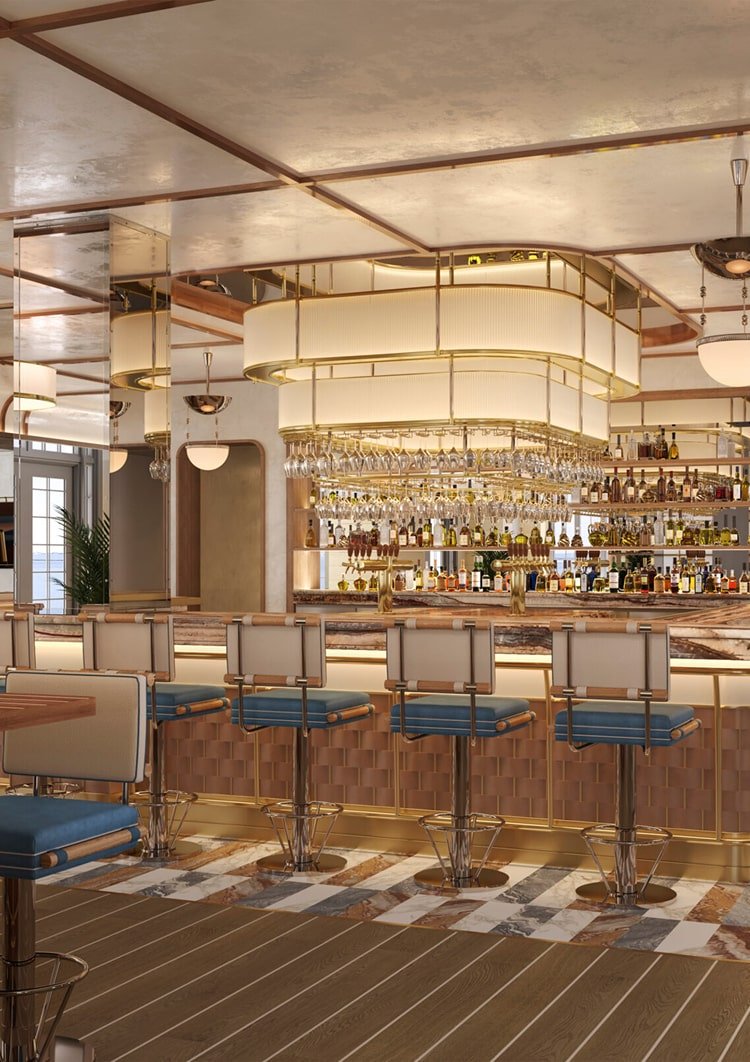
CurrentBurger, The Cooper's modern take on a classic soda shop, adds a completely different personality to the property.
Smash burgers, fries, and hand-spun milkshakes are exactly the kind of food that sounds good after several hours of dancing.
Rather than assuming the restaurant automatically functions as an after-party venue, we would treat it as a planning conversation with the hotel. If private use, a buyout, or extended hours are available for a particular wedding weekend, it could create a memorable shift in tone after a formal reception.
The appeal is the contrast.
You can move from candlelight, black tie, and a full band into burgers, milkshakes, and a much looser final hour without asking guests to cross Charleston in formalwear.
That is the kind of transition people remember.
A Sample Cooper Wedding Weekend
There is no universal formula, but a well-paced Cooper wedding weekend might look something like this.
Friday Afternoon
Guests arrive in Charleston, check into The Cooper, and receive a clear itinerary along with a simple welcome gift.
Then give them space.
People need time to unpack, change, explore, sit by the water, or recover from travel.
Friday Evening
Host the rehearsal dinner off property, perhaps at Sorelle, followed by a larger welcome gathering.
The purpose of Friday is connection. People are arriving from different chapters of your lives, sometimes meeting for the first time.
Let the evening feel social rather than overly programmed.
Saturday Morning
Nothing mandatory.
Let guests enjoy Charleston and the hotel.
This is where the property can work in your favor because doing nothing does not feel like having nothing to do.
Saturday Afternoon
Host the ceremony on the Grand Lawn, with the harbor behind you and a weather plan already established.
From there, guests move into cocktails without a complicated transportation reset.
Saturday Evening
Dinner and dancing continue in the Asten Ballroom.
Lighting shifts. Music builds. The room begins more polished and gradually loosens as the evening moves toward dancing.
If private access and timing allow, a final change of atmosphere at CurrentBurger could give guests one more completely different experience before the night ends.
Sunday Morning
Farewell brunch.
Coffee. Good food. No speeches required.
Let people sit for a while.
The best weekends rarely end with a dramatic finale. They end with people saying they wish they had another day.
Frequently Asked Questions About Weddings at The Cooper
When did The Cooper open?
The Cooper opened in March 2026 on the Charleston peninsula at 176 Concord Street, adjacent to Waterfront Park.
How many rooms does The Cooper have?
The hotel has 191 rooms and suites, making it possible for a substantial portion of a destination wedding guest list to stay together depending on availability and room-block structure.
What are the primary wedding venues at The Cooper?
Two of the most significant spaces for weddings are the Grand Lawn, an outdoor waterfront setting, and the Asten Ballroom, the hotel's primary indoor ballroom with additional pre-function space and a private terrace.
Is The Cooper a good fit for a full wedding weekend?
It can be particularly well suited to couples who want accommodations and multiple wedding events centered around the same property while still giving guests easy access to downtown Charleston.
What should couples consider when planning an outdoor wedding at The Cooper?
Wind, heat, humidity, guest comfort, sound, tenting possibilities, and weather contingencies should all be addressed early in the planning process. Waterfront events are beautiful, but the environment needs to be treated as part of the production plan.
Do all wedding events need to happen at The Cooper?
No. One of the strongest approaches may be using The Cooper as the weekend's home base while selectively incorporating other Charleston locations. The key is avoiding unnecessary movement and making every off-property event worth the transition.
Is The Cooper Right for Your Charleston Wedding?
The Cooper adds an important new option to the Charleston wedding landscape.
The harborfront setting is compelling, but the bigger opportunity is how the property can support the rhythm of an entire weekend.
Guests can stay together. Multiple events can happen without constant transportation. Charleston remains directly outside the door. The Grand Lawn gives couples an outdoor waterfront setting, while the Asten Ballroom allows the evening to move indoors without losing its sense of occasion.
For the right wedding, that creates something we value highly: control without confinement.
The weekend can feel cohesive without keeping everyone on a rigid itinerary.
It can be highly produced without guests feeling managed.
And the design can make a statement while still leaving room for Charleston, the harbor, and the people gathered there to do some of the work.
If The Cooper is on your shortlist, evaluate it as more than a ceremony and reception venue. Look at how your guests will arrive. Where they will stay. Where they will gather Friday night. What Saturday morning feels like. How the reception transitions into late night. And what they experience before they leave on Sunday.
That is the real measure of a destination wedding venue.
If you'd like to talk with us about planning your celebration at The Cooper or elsewhere in Charleston, inquire with Reagan Events here.
Want more behind-the-scenes stories, planning perspective, and destination inspiration?
Subscribe to our newsletter for updates and expert insight.
Follow Reagan Events on Instagram and TikTok for event design, destinations, and behind-the-scenes production.
Tune in to The Wine and Dine Me Podcast on Apple Podcasts and Spotify for conversations about weddings, hospitality, business, and the people shaping the industry.