
Alex Schon
There’s a moment at every wedding weekend when you can tell if the team is built for it.
Not when the ceremony starts. Not when the band hits the first note. Earlier than that.
It’s the tiny, unremarkable moments. The ones no guest clocks. The ones no one posts. The ones that decide whether the day feels calm or feels like everyone is sprinting.
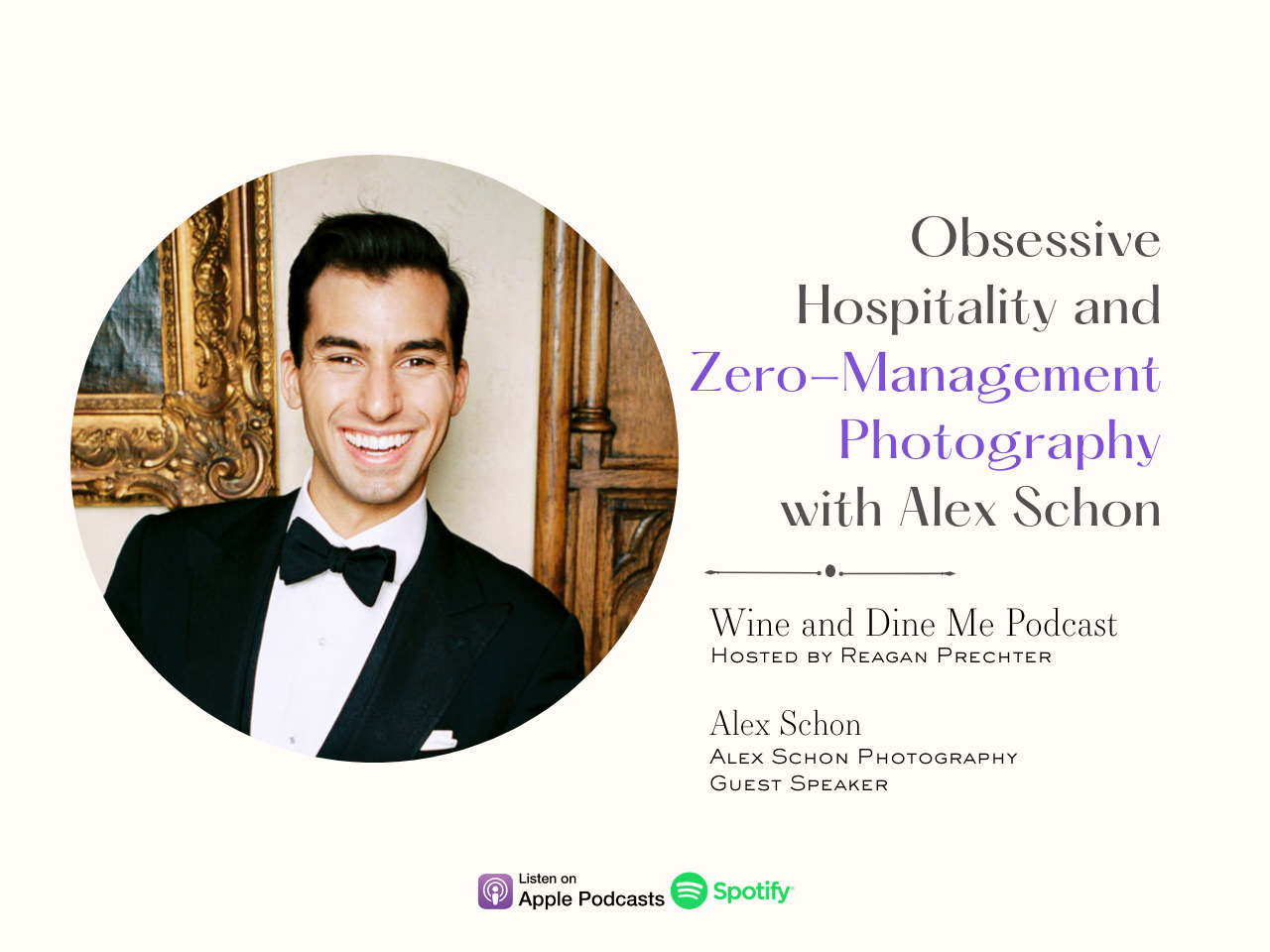
On this episode of The Wine and Dine Me Podcast, I sat down with Alex Schon, a photographer based outside Philadelphia who has built his entire brand on two things most people talk about but few actually deliver: obsessive hospitality and zero-management partnership.
Alex comes from an aerospace engineering background, which is exactly as intense as it sounds. It also explains why he approaches weddings like a system, not a vibe. If one element slips, it doesn’t stay contained. It compounds. And when you’re producing multi-layered, high-touch events, the compounding is what creates chaos.
This conversation is for planners, vendors, and couples who care about execution. Not “pretty.” Not “Pinterest.” Execution.
Because when the stakes are high, table stakes are not optional.
Listen to the full episode via Spotify or Apple.
The photos are not the point. They are the proof.
Alex said something early that landed hard: he sees photography as the final filter.
That’s the job most people forget photography is doing.
Photos don’t just document what happened. They become the record of what happened. They become the evidence that the weekend ran the way it was supposed to run. They are what people show, save, print, and pass down.
Which means the photographer is not just “capturing moments.”
They’re capturing integrity.
That’s why the standards feel intense. Not because anyone is being precious. Because the images will outlive the flowers, the lighting cue, the place cards, the party itself.
When the final gallery is clean, intentional, and thoughtful, it reinforces the credibility of the whole experience - and of those involved.
When it isn’t, it quietly pokes holes in it.
The one-inch rule
We talked about what Alex calls the one-inch rule.
One inch is enough to ruin the frame.
A chair turned the wrong way.
A messy corner.
A random bottle that should have been cleared.
A detail no one noticed in real-time that now lives forever in the proof.
Here’s the point: clients might not be able to articulate what feels “off,” but they feel it. Because sophisticated events are built on coherence. The whole weekend is supposed to read as one story, one standard, one level of care.
One sloppy detail can make the entire production feel less certain.
Not because clients are nitpicky.
Because they paid for mastery, and mastery shows up in the margins.
This is also where I think planners and photographers align more than people realize. We’re both in the business of protecting the story.
Alex just protects it in the final frame.
Zero management is the highest compliment
You know what’s rare? A vendor you don’t have to manage.
Not a vendor who “means well.”
Not someone who’s talented but needs babysitting.
Not someone who shows up with great energy and no infrastructure.
A true partner.
Alex talks about being “zero management” as a standard, not a tagline. It means the planner does not have to chase you. You are already aligned. You are already tracking the day. You are already making decisions you’re qualified to make without creating more work for everyone else.
That’s what sophisticated teams do. They add bandwidth back into the room.
The vendors who require constant reminders, constant updates, constant emotional management, they do not just take time. They take attention. They make the day more complicated than it needs to be.
The best partners bring ease to the day.
Obsessive hospitality is not performative
This is where the conversation gets interesting, because “hospitality” is one of those words people throw around as a buzz word.
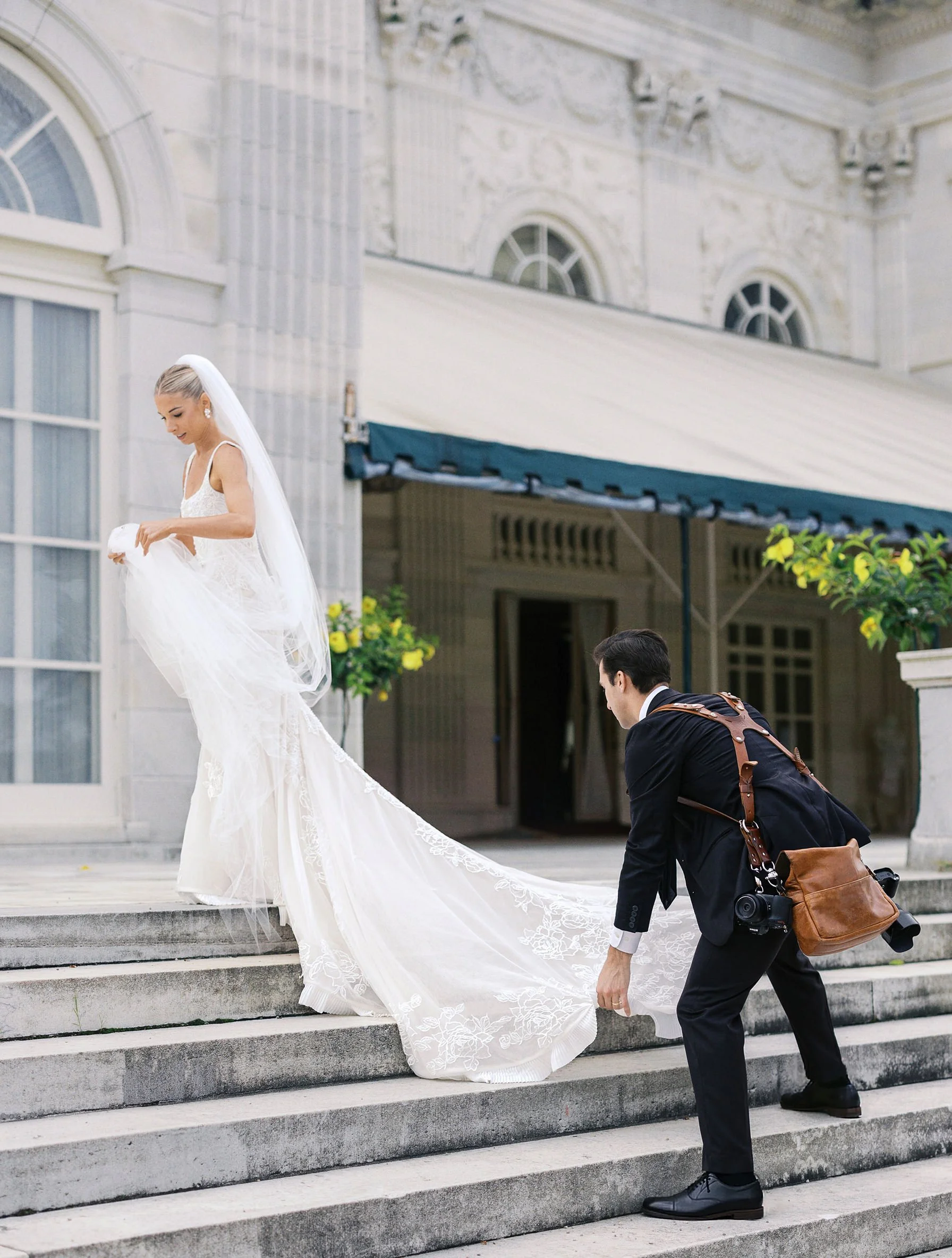
Alex isn’t talking about being overly friendly or trying to be everyone’s best friend. He’s talking about care that shows up as preparedness. Awareness. Restraint. Good timing.
He mentioned the “Mary Poppins bag” mentality. Having what’s needed before anyone asks. Fixing what can be fixed without making it a whole thing. Protecting the couple’s energy instead of consuming it.
This is what high-touch actually looks like:
You solve problems quietly.
You do not announce yourself.
You do not make the couple (or planner for vendors) manage your needs.
You anticipate what the room will require, then you’re already there.
Hospitality is not a performance.
It’s competence with grace and taste.
Why an engineering brain belongs in weddings
The engineering piece matters here because Alex doesn’t just “feel” the flow of the day. He maps it.
He talks about cascades. If you’re five minutes behind here, you’re ten minutes behind there. That ten becomes twenty when it hits family photos, travel time, room flips, speeches, and dinner service. Suddenly you’re asking the band to adjust, the kitchen to hold, the planner to improvise, the couple to be “flexible” when what they wanted was to feel held.
This is why detailed people can either be calming or exhausting.
Alex made a distinction I loved: anxiety is inward-facing, care is outward-facing.
An anxious vendor is frantic because they’re trying to protect themselves.
A careful vendor is calm because they’re trying to protect everyone else.
Same intensity. Completely different energy.
Pricing, trust, and the quiet ways reputations get damaged
We also talked candidly about pricing, trust, and what happened in the post-COVID market.
Here’s the reality: when pricing looks opportunistic, people notice. Especially planners. Especially the people who refer you.
Your pricing is not just your rate. It’s a signal. It tells the market whether you’re consistent. Whether you’re principled. Whether you value long-term relationships or short-term wins.
If someone discovers their friend paid less or their planner sees you quote two different numbers for the same scope, the problem isn’t the math.
It’s the integrity gap.
High-end work is built on trust, and trust is fragile. You do not get to be sloppy with it and still expect loyalty.
What couples should take from this episode
If you’re a couple reading this, you don’t need to memorize the one-inch rule or build a production schedule. But you should listen for one thing when you’re hiring your team:
Do they make the experience about themselves, or do they make it easier for you to exist inside your own weekend?
A sophisticated event is not the one with the most extras.
It’s the one with the fewest stress points.
That comes from team selection. It comes from people who show up prepared. People who know where they belong. People who can make decisions without creating drama.
You’re not just hiring talent.
You’re hiring nervous system regulation.
What planners and vendors should take from this episode
This episode is a check on ego.
Because most breakdowns on event days are not caused by “big problems.”
They’re caused by small gaps that no one owned early enough.
The takeaway is not “be perfect.”
The takeaway is “be accountable.”
If you want to work at the highest level, you cannot be a project.
You have to be a partner.
That line from Alex stayed with me for a reason.
If you’re a project, you’re not a partner.
Listen to the full episode via Spotify or Apple.
If you would like to talk with us about planning your next event, HERE.
Want more behind-the-scenes stories, trends, and inspiration?
Subscribe to our newsletter for inspiration, updates, and expert advice.
Follow us on Instagram and TikTok for behind-the-scenes moments, trending ideas, and so much more.
Tune in to our Wine and Dine Me Podcast in Apple Podcast and Spotify, where we explore all things weddings, life, and business.