
Jessica Connolly
There’s a moment in every well-designed space when you can feel it working.
People move without hesitation. Conversations happen naturally. Nothing feels forced, loud, or overly styled. You might not notice why it works, but you feel the ease of it immediately.
That’s not decoration. That’s design doing its job.
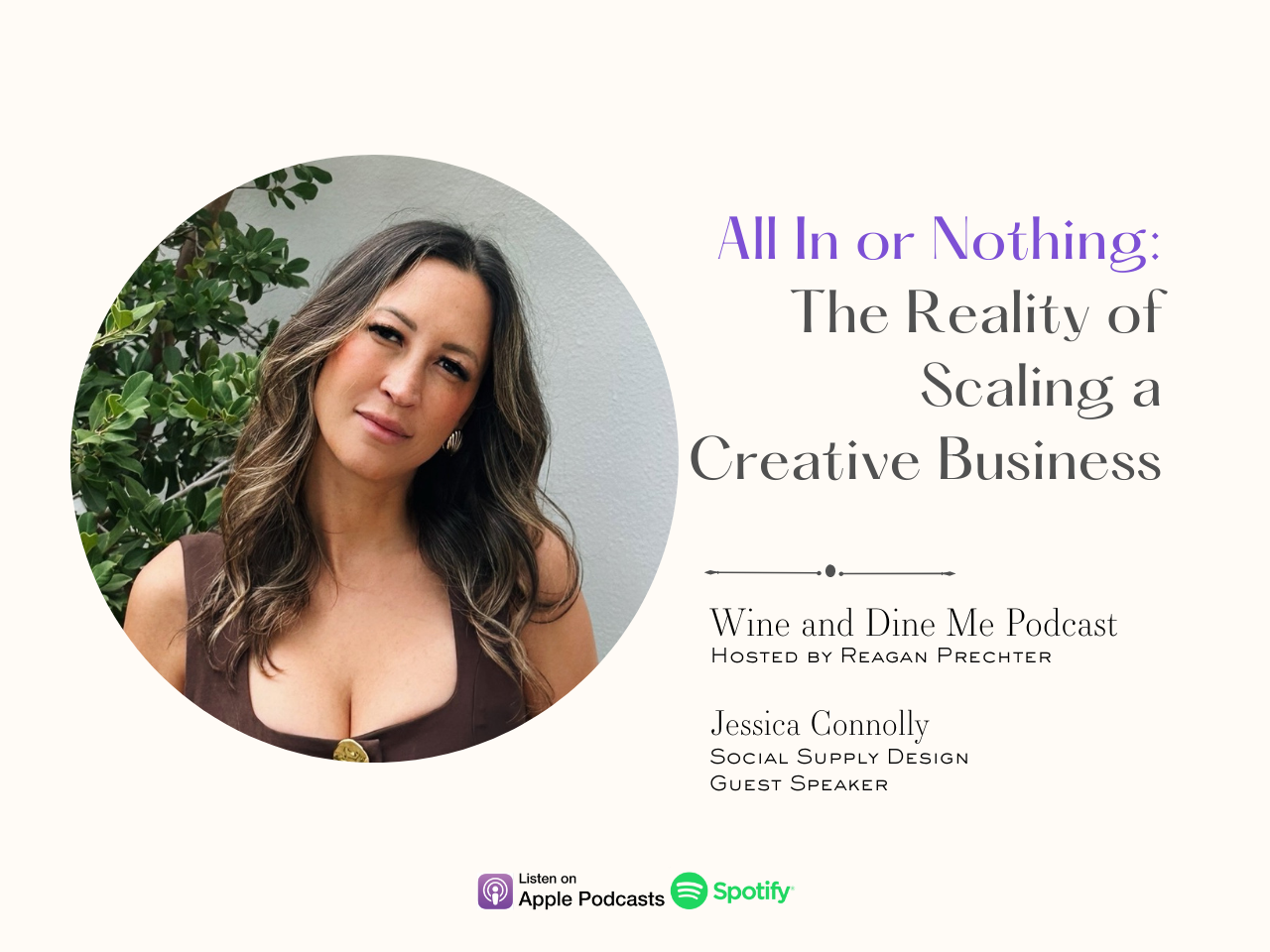
In a recent episode of Wine and Dine Me Podcast, I sat down with Jessica Connolly, co-founder and creative director of Social Supply Design, to talk about what separates spaces that photograph well from experiences that actually land.
What unfolded was a candid conversation about problem-solving, human behavior, scaling creative businesses, and why the most impactful design choices are often the least obvious.
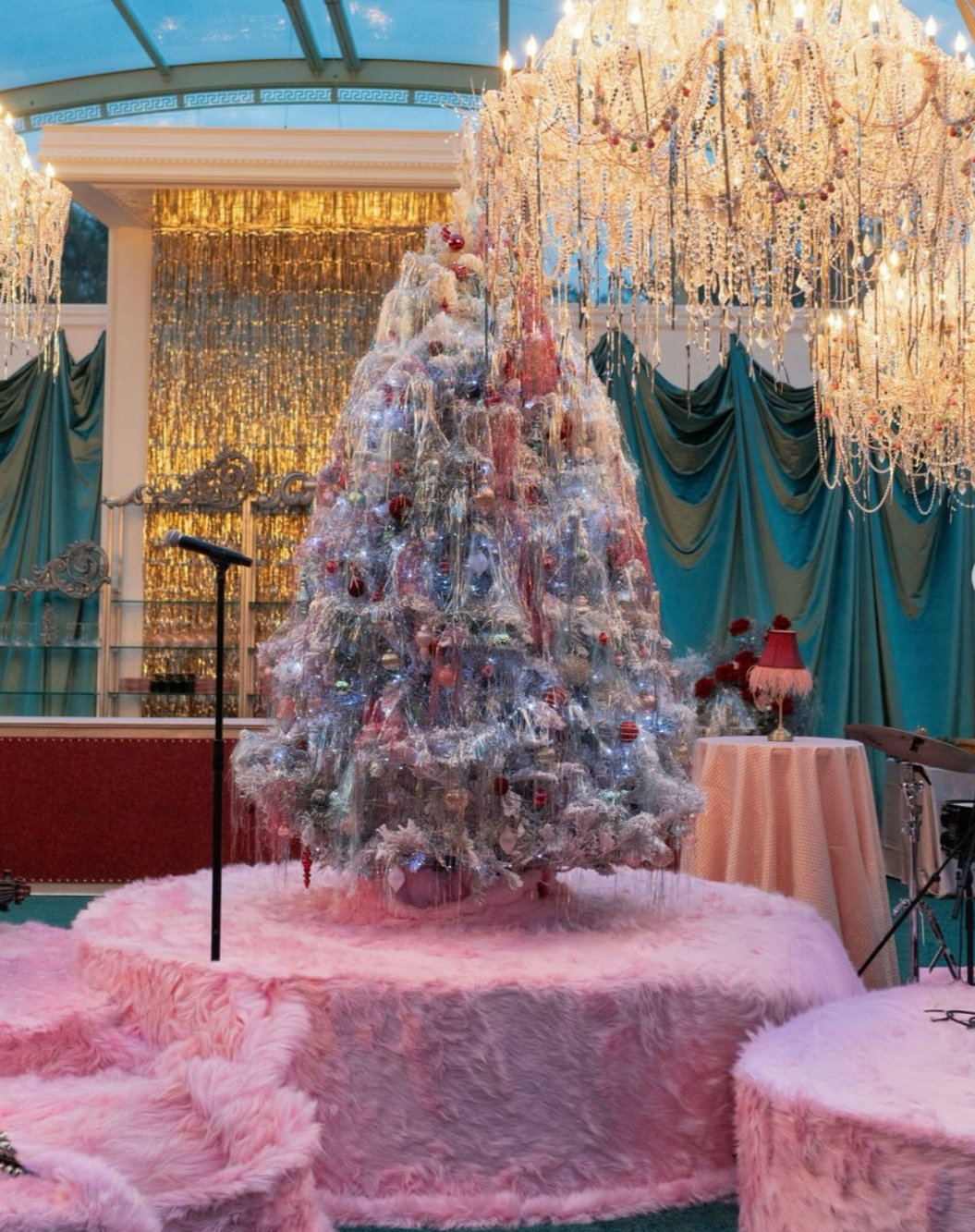
Design Is About Solving Problems, Not Styling Rooms
One of the most resonant moments of our conversation came early, when Jessica put language to something many planners and designers feel instinctively but don’t always articulate:
Design without function is just decoration.
Real design solves problems. It anticipates movement, emotion, tension, and flow before guests ever arrive. It considers how people enter a room, where they pause, who they gravitate toward, and how they transition from one moment to the next.
In events, those problems are rarely just spatial. They’re emotional.
Family dynamics. Comfort levels. Energy shifts. The difference between a packed dance floor and a quiet place for conversation. Design that works makes those things feel effortless without calling attention to itself.
The Human Component Is the Starting Point
The most successful spaces are not built around trends or Pinterest boards. They’re built around people.
Jessica spoke about listening for patterns rather than preferences. The small comments clients make. The offhand mentions of discomfort, nostalgia, or ease. Those cues often reveal more than a mood board ever could.
When design starts with the human experience, everything else becomes clearer. Scale, placement, lighting, sound, and structure all follow naturally when you understand how people need to feel in the space.
This approach mirrors how we think about guest experience at Reagan Events. When guests feel considered, the design fades into the background and the moment takes center stage.
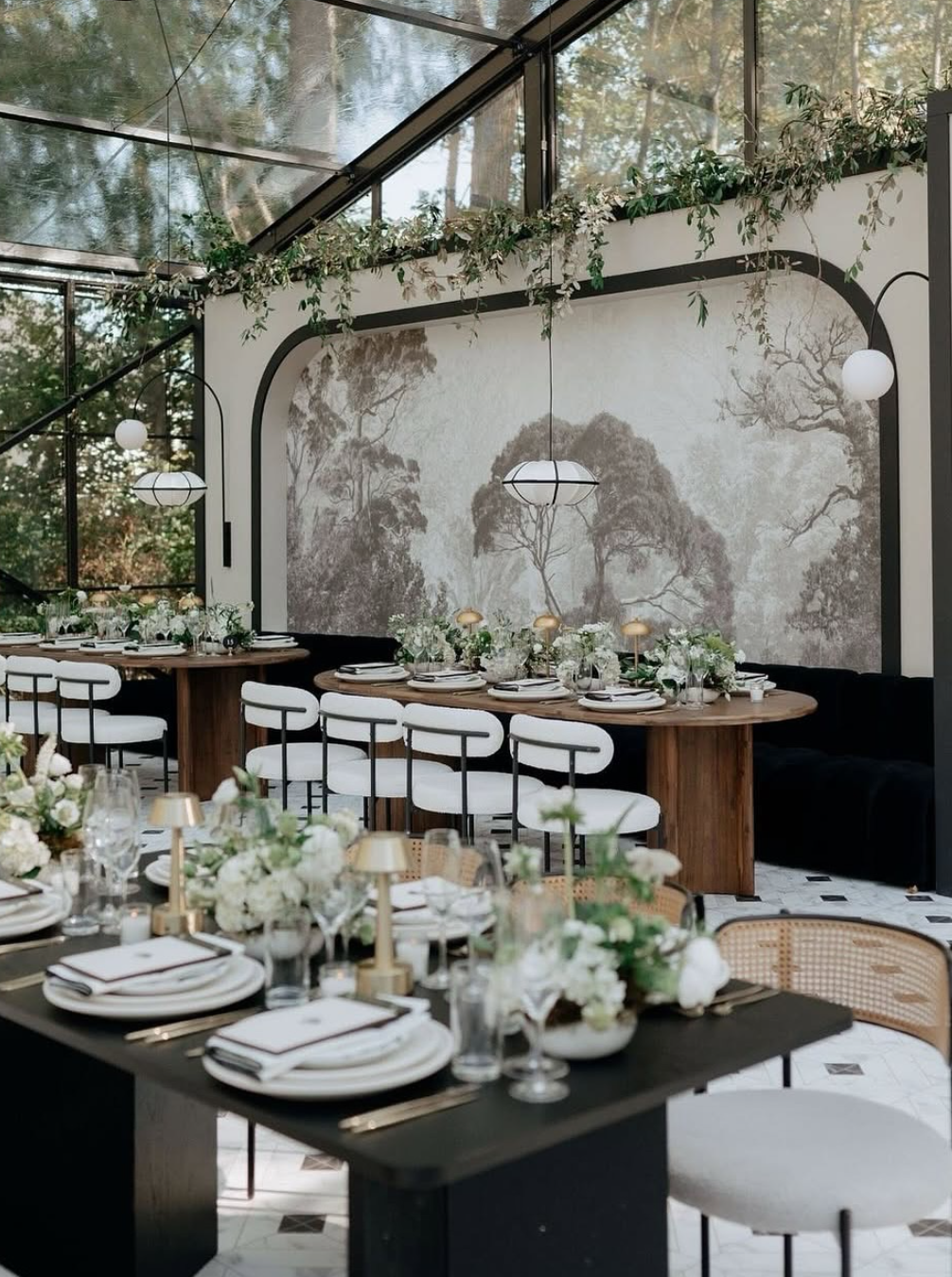
Novelty Gets Attention. Nostalgia Creates Connection.
There’s a difference between impressing guests and moving them.
Jessica shared how, in a room full of highly creative professionals, novelty alone isn’t enough. Everyone has seen beautiful things. Everyone understands production value.
What people haven’t outgrown is nostalgia.
The most powerful design moments often tap into something familiar. A memory. A feeling. A sense of warmth or recognition that makes people feel grounded before surprising them.
That balance - a little novelty paired with deep emotional resonance - is where connection lives. It’s also where experiences linger long after the event ends.
Execution Is the Difference Between Vision and Trust
A strong concept is only the beginning.
Execution is where trust is either built or broken.
Jessica spoke openly about bringing production in-house after realizing that outsourced builds often couldn’t meet the level of quality her clients expected. Not because the ideas weren’t strong, but because the final result didn’t live up to the promise.
That decision reshaped their business model and reinforced a belief we share deeply: if the finished product isn’t better in person than it looked on paper, the work isn’t done.
In high-end events, over-delivering isn’t a bonus. It’s the baseline.
Scaling Is Emotional, Not Just Operational
Scaling a creative business isn’t about systems alone. It’s about carrying the weight of people’s expectations, timelines, and once-in-a-lifetime moments without cutting corners.
Every project is a one-off. Every deadline is fixed. Every experience is personal.
Jessica shared how growth required moving faster, working longer hours, and maintaining standards even when margins were tight. The pressure to innovate, execute, and perform consistently doesn’t ease as you scale. It intensifies.
What sustains that growth isn’t hustle. It’s clarity.
Hiring for Strengths, Not Similarity
One of the most valuable takeaways from our conversation centered on leadership and hiring.
Knowing the value of your time means understanding what you should not be doing.
Jessica was clear: she hires people who are smarter, more organized, or more specialized than she is in certain areas. That self-awareness allows her to focus on vision, creativity, and direction rather than forcing herself into roles that dilute her impact.
More importantly, she looks for three non-negotiable traits when building her team:
Humility
Hunger
Honesty
Those qualities create teams that take pride in their work, communicate clearly, and stay invested in the outcome. Culture isn’t built through perks. It’s built through shared standards and mutual respect.
Vision Is What Creates Buy-In
People don’t stay because of titles or tasks. They stay because they believe in where they’re going.
Jessica spoke about the importance of creating a clear vision for her team, one that extends beyond the job at hand. When people understand the purpose behind the work, they’re more willing to carry it through to the final detail.
That kind of buy-in can’t be manufactured. It’s modeled. It’s shown in how leaders show up, how late nights are shared, and how standards are upheld even when no one is watching.
Listen to the full episode via Spotify or Apple.
If you would like to talk with us about planning your next event, HERE.

Want more behind-the-scenes stories, trends, and inspiration?
Subscribe to our newsletter for inspiration, updates, and expert advice.
Follow us on Instagram and TikTok for behind-the-scenes moments, trending ideas, and so much more.
Tune in to our Wine and Dine Me Podcast in Apple Podcast and Spotify, where we explore all things weddings, life, and business.