
Luxury Wedding Floral Design: How to Work with Your Florist
Flowers are often the first thing guests notice before they know why a room feels different.
It may be the scent of garden roses near the entry. The way candlelight catches the edge of a petal. The softness of greenery against stone, silk, linen, or tented canvas. Flowers shape the first impression, frame the photographs, support the color story, and help the event feel deeply considered.
At Reagan Events, floral design is never treated as a stand-alone decision. It is part of the larger production: the venue, the season, the guest experience, the lighting, the tabletop, the photography, the ceremony flow, and the feeling we want guests to carry with them when they leave.
For couples planning a high-end wedding in Charleston, an Italy destination wedding, or a multi-day celebration elsewhere, knowing how to work with your florist can make the difference between pretty flowers and a design story that feels fully intentional.
Quick Answer: How should couples work with their wedding florist?
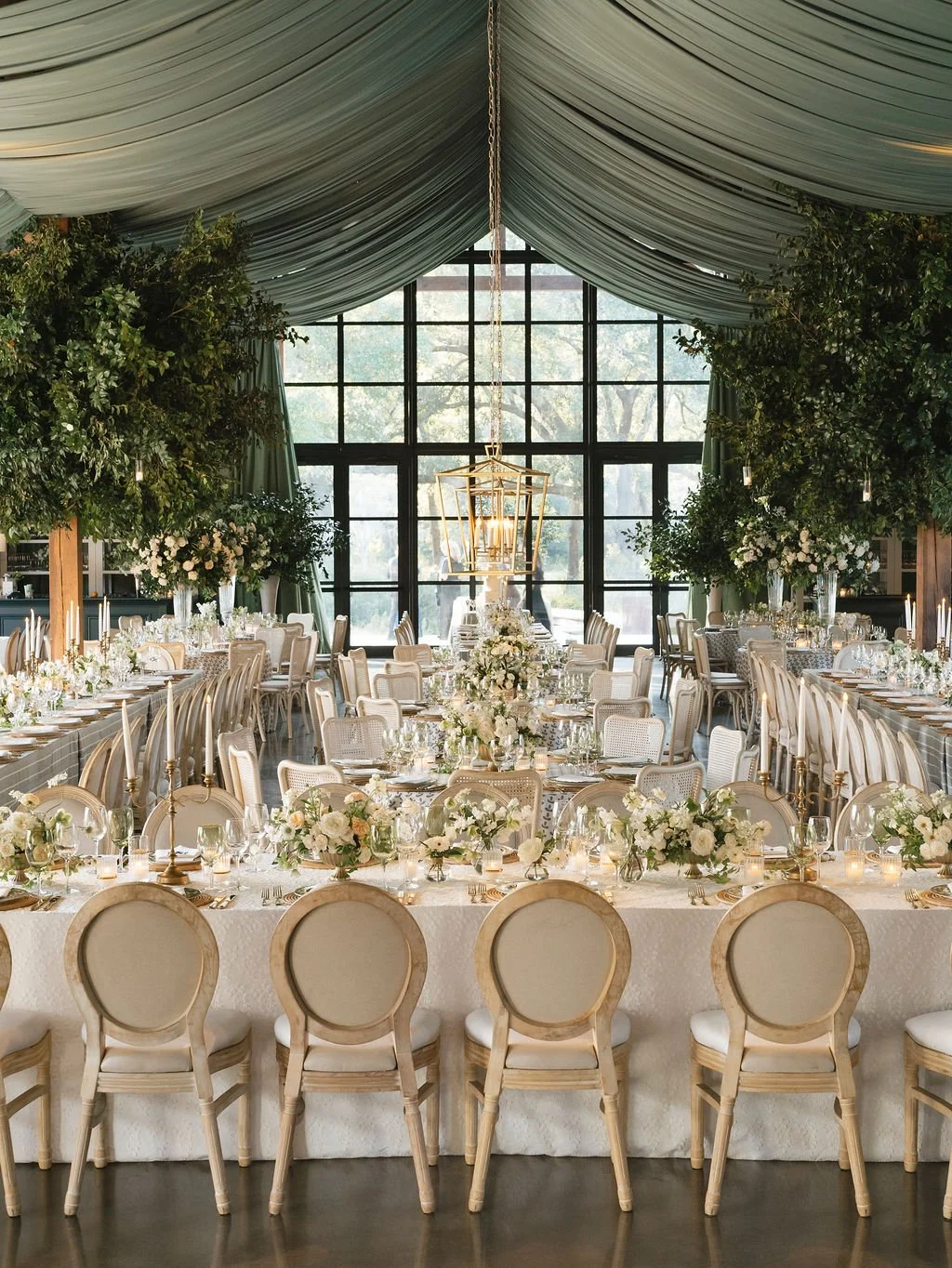
The best way to work with your wedding florist is to begin with atmosphere, seasonality, location, and budget before choosing specific flowers. Share a clear visual direction, trust your florist’s expertise, and allow your planner to connect the floral plan to the full event design. The strongest floral programs are shaped through thoughtful collaboration, practical logistics, and a clear understanding of where flowers will matter most.
Start With Atmosphere Before Flower Names
Many couples begin the floral conversation by naming flowers they love: peonies, garden roses, ranunculus, orchids, lily of the valley. Those preferences matter, but they are rarely the best place to begin.
A florist can do much more with feeling.
Do you want the ceremony to feel like a garden has grown naturally around you? Do you want the reception to feel architectural, restrained, and sculptural? Should the flowers feel loose and gathered, or composed and editorial? Are we creating softness around a historic ballroom, or adding structure to an open-air tent?
Those questions give a designer something useful to interpret.
A flower name is a material. Atmosphere is direction.
This is where your planner can help translate taste into a working design language. As a Charleston wedding planner and destination wedding team, we often begin by looking at the venue itself: the color of the walls, the texture of the stone, the height of the ceiling, the view beyond the ceremony aisle, and the way the room changes once the sun goes down.
Flowers should belong to the place, not fight it.
Use Inspiration Images With Restraint
Inspiration images are helpful until they become noise.
A thoughtful folder of 10 to 15 images is often more useful than a Pinterest board with 200 conflicting directions. The goal is not to ask your florist to replicate someone else’s work. The goal is to show what consistently draws your eye.
Maybe every image has movement. Maybe the palette is tonal and quiet. Maybe the arrangements are low and abundant, or tall and airy. Maybe the images have very few flowers but strong candlelight, beautiful linens, and a meaningful use of negative space.
When sharing inspiration, name what you like. Is it the scale? The softness? The color? The asymmetry? The way the flowers interact with the architecture? That kind of specificity gives your florist room to create something original while still honoring your taste.
For bespoke event design, restraint is often the more useful skill. A clear point of view allows the floral team to make better choices, from stem selection to vessel style to installation scale.
Let the Season and Destination Lead
Seasonality is one of the most important parts of floral design, and it is often one of the most misunderstood.
The flowers available in May are not the same flowers available in October. What thrives in Charleston is not always what makes sense in Tuscany. A wedding in the Lowcountry humidity requires different thinking than a wedding along Lake Como or in a stone villa outside Florence.
Seasonal flowers are usually fresher, more beautiful, and more cost-effective than flowers forced into a date where they do not naturally belong. Peonies, for example, can often be sourced outside their peak window, but the quality and cost may not align with the expectation.
A good florist will guide you toward what is blooming well, holding well, and making sense for the place and time of year.
For an Italy destination wedding, that may mean olive branches, jasmine, garden roses, lemons, figs, or flowers sourced from regional markets. In Charleston, it may mean magnolia, gardenias, smilax, ferns, or materials that can tolerate heat and humidity.
The most compelling floral design feels rooted in place. It quietly confirms the setting.
Understand the Difference Between Pretty and Properly Produced
A floral arrangement can be beautiful in a photograph and still be wrong for the event.
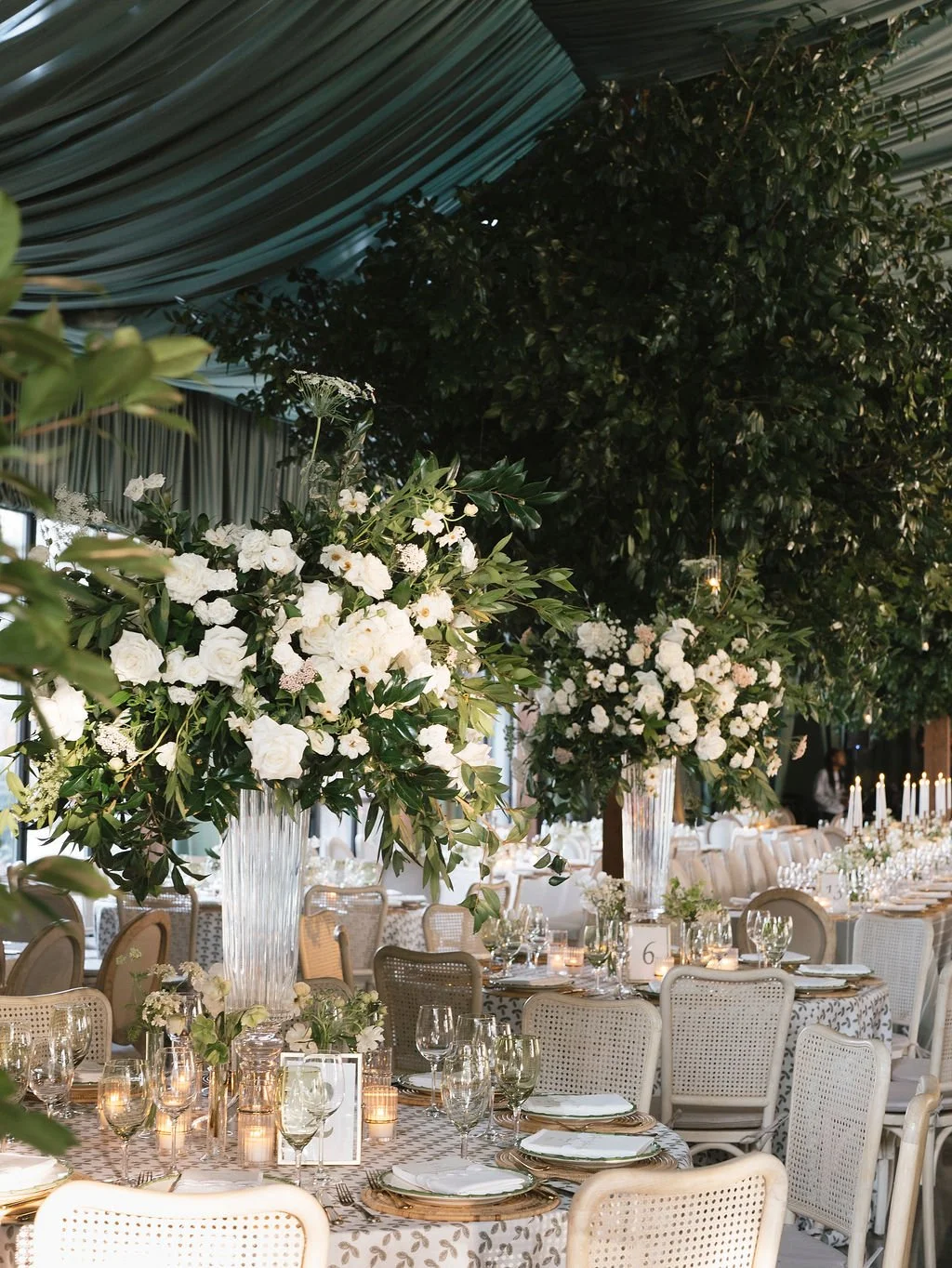
This is where production experience matters. Scale, wind, heat, room flip timing, ceiling height, candle restrictions, vessel weight, transportation, refrigeration, install windows, and breakdown logistics all affect the final floral plan.
A suspended installation in a tent requires rigging approvals, load limits, timing, and coordination with the tent, lighting, and rental teams. A ceremony arch that will be repurposed at the reception needs a safe path, a realistic moving crew, and enough time to be reset discreetly.
This is why floral design should never be planned in isolation.
For high-touch celebrations, the florist needs access to floor plans, table counts, linen selections, lighting plans, venue restrictions, and the full production schedule. Your planner’s job is to make sure those details are not scattered across separate conversations. They need to be held together.
That level of coordination is also why we believe in curated vendor teams. A strong florist is not just talented. They are reliable under pressure, communicative, appropriately staffed, and able to collaborate with the rest of the creative team. We shared more on that philosophy in our post on why preferred vendor lists matter.
Where to Invest in Wedding Florals
Not every surface needs flowers.
In fact, one of the clearest signs of refined design is knowing where to stop. Flowers lose their impact when they are spread thinly across too many small moments. We would rather see one unforgettable ceremony installation, a spectacular entry, or a beautifully layered head table than a room filled with arrangements that feel under-scaled.
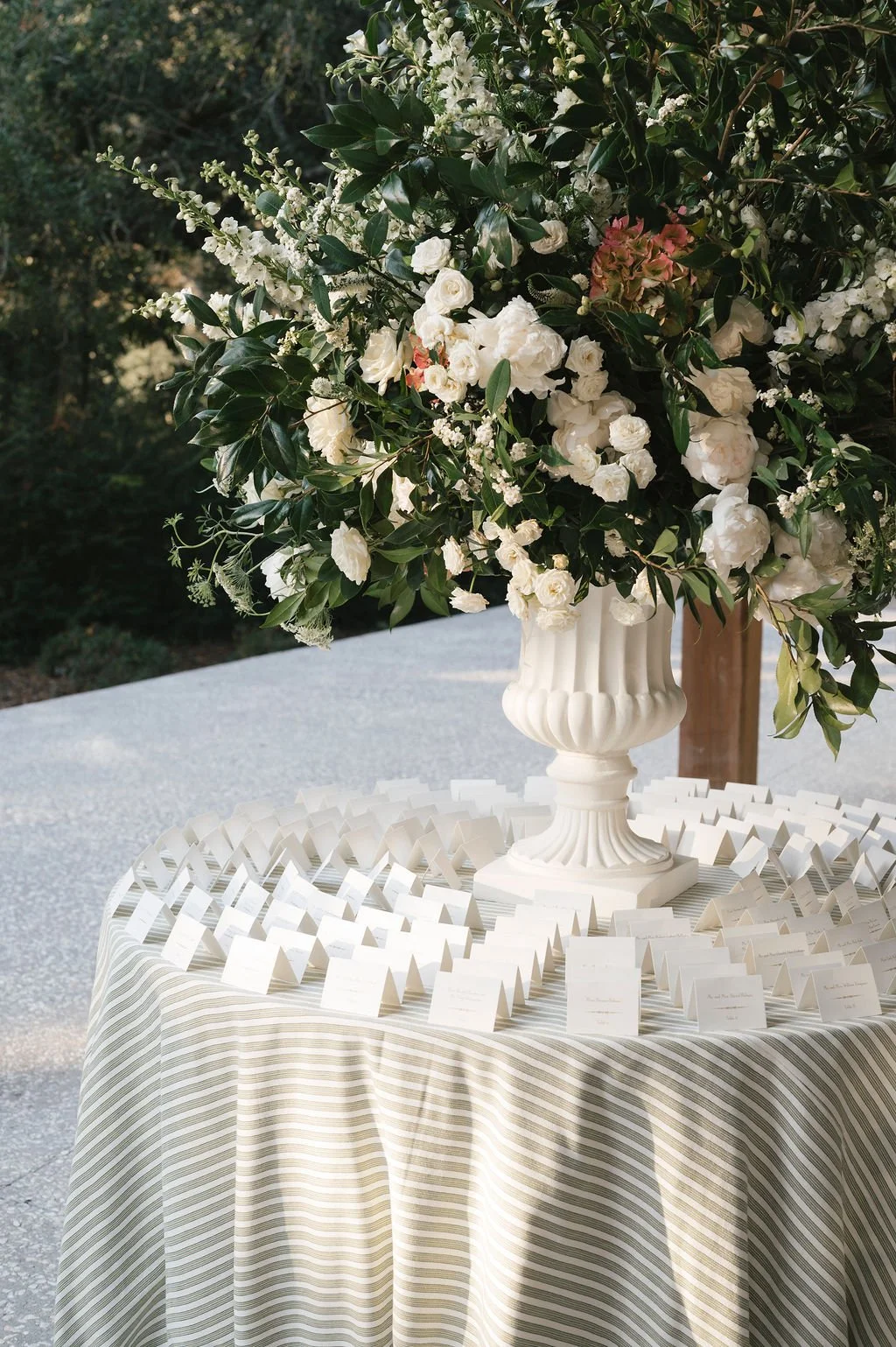
The highest-impact areas are usually the ceremony backdrop, guest arrival moment, head table, reception tables, and architectural features that naturally draw the eye. Secondary areas can often be handled with candles, greenery, fruit, thoughtful styling, or a single sculptural arrangement.
This is also where the difference between garden roses and standard roses matters. A standard rose may be appropriate in some contexts, but garden roses have a softness, fragrance, and petal structure that feel entirely different. They are more expensive, so we often use them where they will be appreciated most: bouquets, close-up tablescapes, ceremony moments, and places guests will encounter up close.
You do not need everything everywhere. You need the right things in the right places.
Repurpose Flowers Thoughtfully
Repurposing ceremony flowers can be a smart use of budget, but only when the logistics support it.
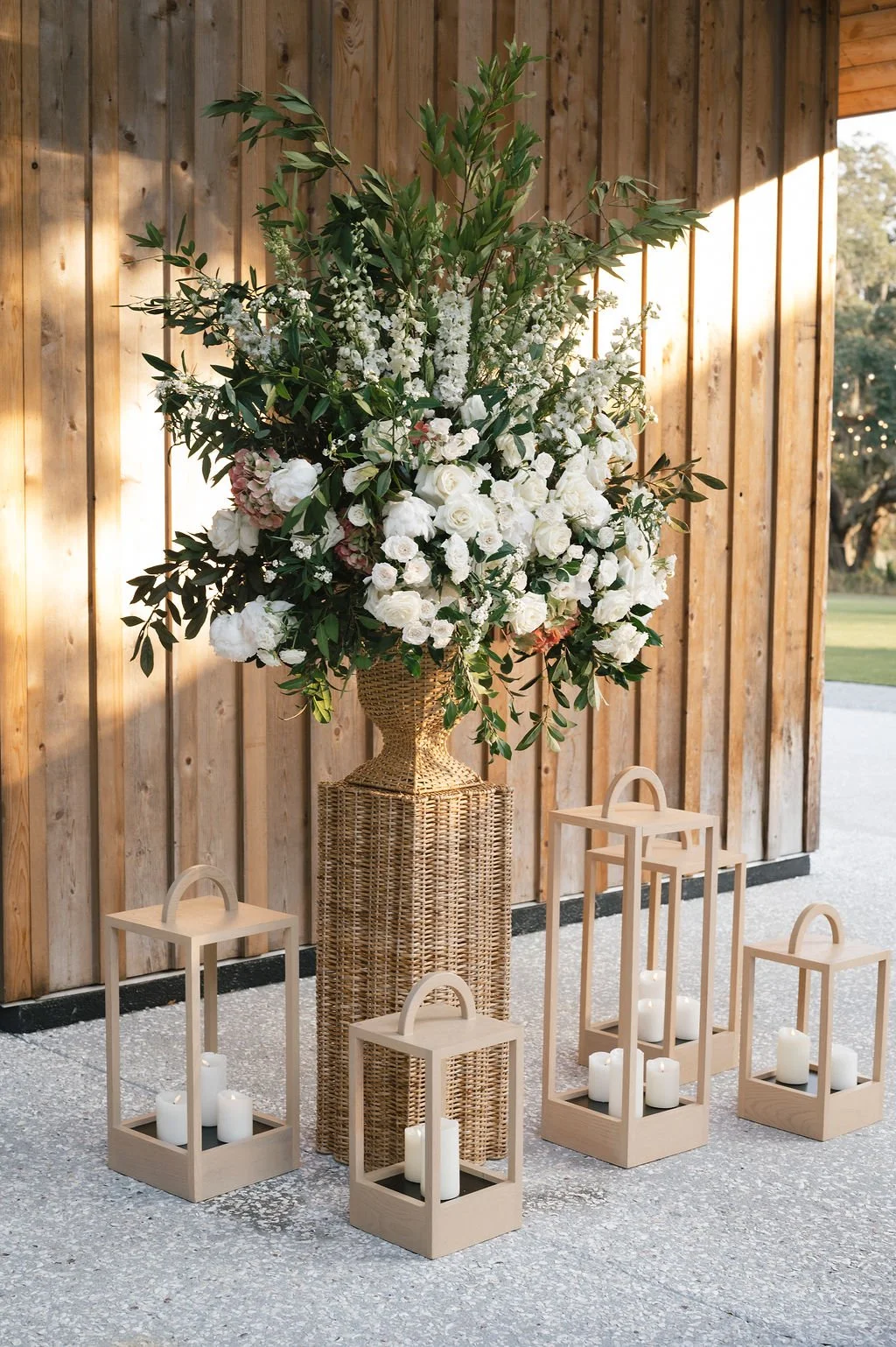
A pair of ceremony arrangements may be moved to the reception entrance. A floral arch may become a band backdrop. Aisle pieces may be reset around a stage, bar, or lounge.
But repurposing has to be designed from the beginning. The pieces need to be movable, stable, staffed, and timed carefully so the shift stays discreet.
When repurposing is planned well, guests never see the shift. They simply feel that the entire event remains lush, balanced, and complete.
For multi-day weddings, this principle can extend beyond the wedding day. The welcome party, rehearsal dinner, wedding reception, and farewell brunch can share a connected floral language without repeating the exact same look. The weekend should feel cohesive, not copied.
Do Not Separate Flowers From Lighting
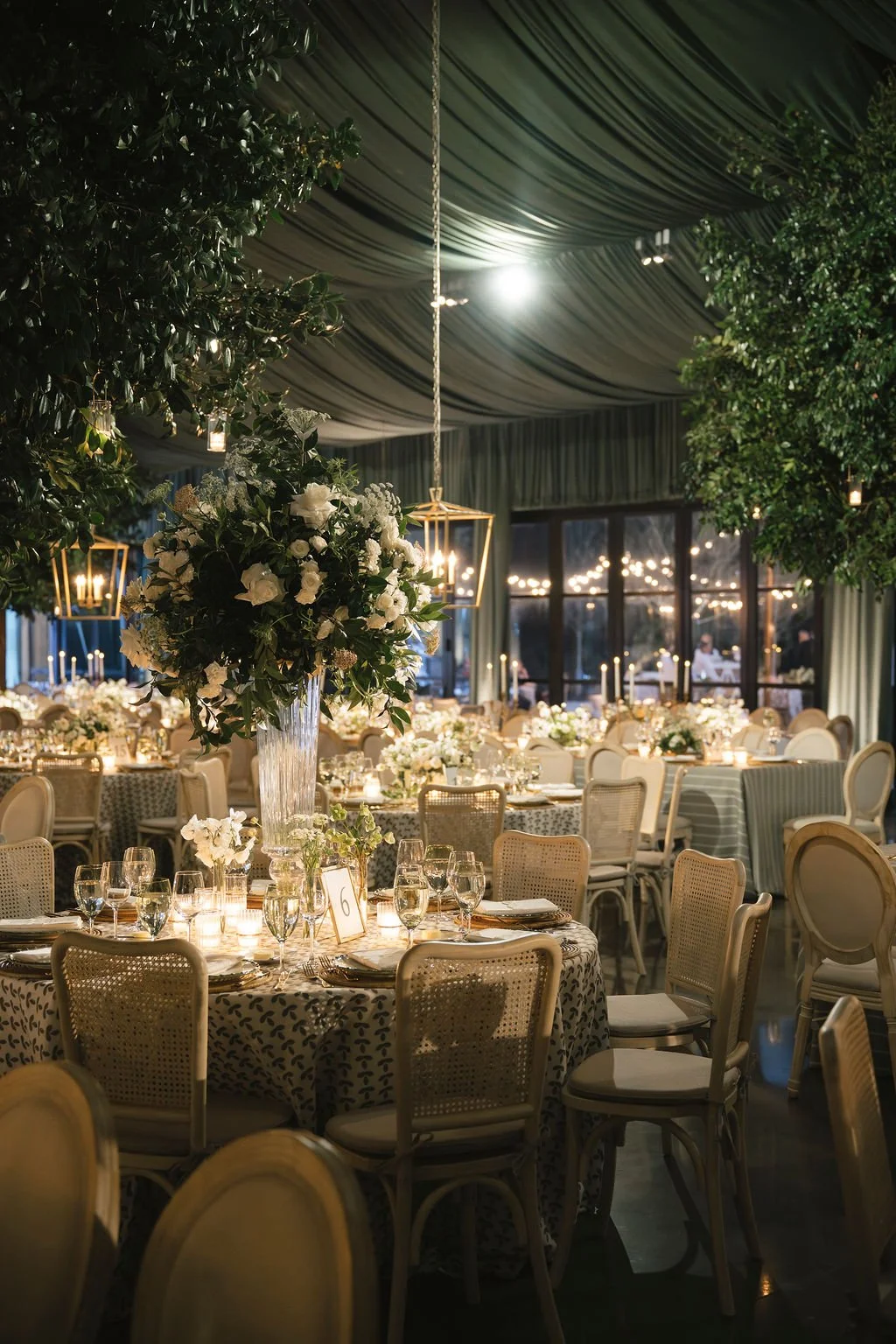
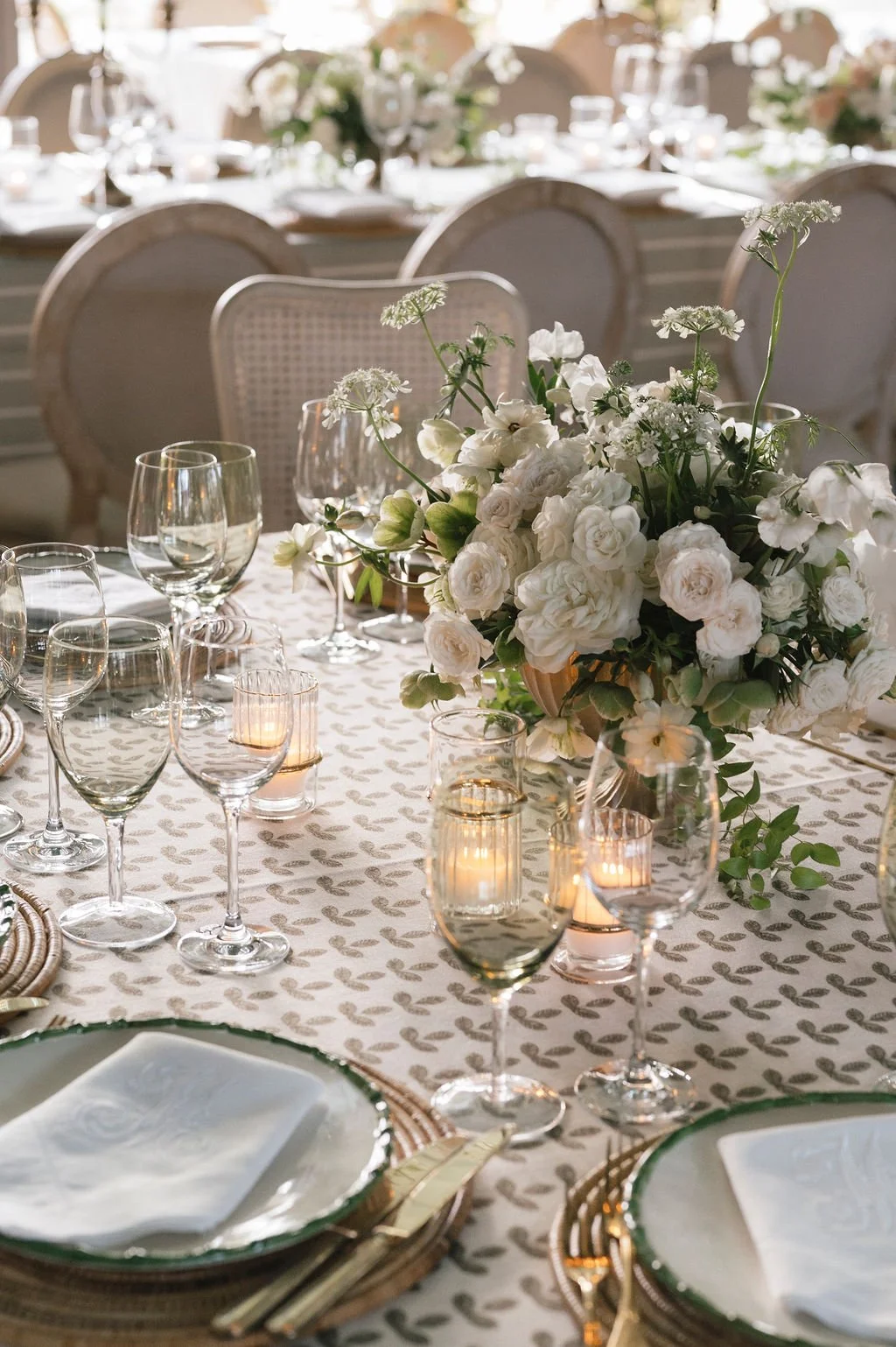
Flowers and lighting are deeply connected. The same centerpiece can look rich and dimensional under warm pin spots, then appear flat under the wrong lighting temperature. Blush tones can glow. Burgundy can deepen. Greenery can either feel lush or disappear into shadow.
This is especially important for tented receptions, ballrooms, and destination venues where natural light changes throughout the evening. We often coordinate floral and lighting conversations together because the guest experiences the room as a whole.
You can see this in large-scale spaces like The Dunlin, where floral direction, draping, candlelight, and architecture all need to work together to keep the reception feeling warm at scale.
When a Floral Mock-Up Matters
For weddings with a significant floral investment, a mock-up can be very helpful. It is not always required for every event, but when the design depends on a specific color balance, centerpiece scale, vessel choice, or table composition, seeing a sample in advance can prevent costly disappointment later.
A mock-up allows you to review the flowers in three dimensions. You can see whether the arrangement feels too tight, too loose, too tall, too wide, too colorful, or too quiet. You can test the linen, charger, menu, glassware, candlelight, and vessel together.
A centerpiece may be beautiful on its own but wrong once placed on the actual table with the full setting. The mock-up helps everyone refine before the wedding week, when changes become more expensive and more limited.
For destination weddings, the mock-up may happen virtually through photographs and video from the florist. With the right communication, it can still be a productive step.
Be Honest About Budget Early
Floral budgets should be clear from the beginning.
A florist cannot design responsibly around a number they do not know. When couples withhold the budget, the florist is forced to guess, which often leads to proposals that are either too thin or too ambitious. Neither is helpful.
Being clear about budget gives your florist and planner the information they need to make smart recommendations. A strong floral budget includes far more than flowers: sourcing, conditioning, design labor, vessels, mechanics, transport, installation, staff, breakdown, taxes, delivery, and creative expertise.
For a refined wedding with ceremony flowers, cocktail hour pieces, reception centerpieces, personal flowers, and installations, the floral investment can vary widely depending on guest count, venue, season, destination, and design ambition. The better question is not “What should flowers cost?” It is “Where will flowers most meaningfully support the experience?”
A planner can help answer that with context.
Sustainability Should Be Considered, Not Performed
Sustainability in floral design can simply be part of thoughtful planning. Local sourcing, seasonal flowers, foam-free mechanics, reusable vessels, and post-event donation plans all reduce waste while supporting a more intentional floral program. This is one reason our destination wedding portfolio reflects such a strong sense of place. The most compelling events do not feel imported onto a location. They feel shaped by it.
How Reagan Events Works With Florists
At Reagan Events, the florist is part of the creative and production team from the beginning.
We help define the design direction, curate the visual language, communicate the budget, review proposals, manage revisions, coordinate mock-ups, align floral plans with rentals and lighting, and make sure the installation is realistic within the production schedule.
For clients, this creates a calmer process. You are not expected to become fluent in flower availability, vessel sizing, rigging rules, or centerpiece counts. You have a team translating the vision into decisions and making sure those decisions hold up in real life.
That is the heart of full-service wedding planning. The design should be beautiful, but it also has to arrive on time, survive the conditions, photograph well, support guest movement, and feel aligned with the weekend as a whole.
Flowers are emotional. Logistics are practical. The best events respect both.
Frequently Asked Questions About Wedding Floral Design
How much should couples budget for wedding flowers?
The floral budget depends on guest count, venue, season, location, and the scale of the design. For high-end weddings, florals are often one of the larger design investments because they involve product, labor, transportation, installation, and breakdown.
Should we choose specific flowers before hiring a florist?
You can share flowers you love, but it is better to begin with atmosphere, color, season, and venue. A florist can then recommend blooms that support the overall vision and perform well for your date and location.
Can ceremony flowers be reused at the reception?
Yes, when the pieces are designed to move and the timeline allows for it. Repurposing works best when it is planned in advance with the florist, planner, venue, and production team, but don’t expect to repurpose a large ceremony arch or chuppah that took hours to construct.
Should we hire a local florist for a destination wedding?
In many cases, yes. A local florist understands the region, climate, flower markets, and venue realities, however the most professional florists have travel teams, refrigerated trucks and can take their operation anywhere.
How do we find the right florist?
Start with your planner. At Reagan Events, we match couples with floral designers based on aesthetic alignment, professionalism, scale, production ability, and the needs of the specific celebration. The right florist can interpret the vision and execute it beautifully under real event conditions.
Begin With the Feeling
The best floral design does not begin with a stem count.
It begins with how you want the space to feel when guests arrive. Welcoming. Romantic. Restrained. Abundant. Sculptural. Soft. Unexpected. Deeply personal.
From there, the right florist can shape the materials. The right planner can hold the full picture. Together, they create a floral program that feels natural to the setting, generous to the guest experience, and worthy of the moment being celebrated.
If you are planning a Charleston wedding, an Italy destination wedding, or a multi-day celebration with a strong design point of view, inquire with Reagan Events to begin the conversation.