
Jordan kahn

A packed dance floor is easy to see. The systems behind it are not.
When a band walks onto a stage, the guests see the performers, hear the music and feel the energy in the room. They do not see the hiring standards, travel logistics, equipment strategy, contingency plans, sound checks, staffing policies and countless decisions that had to happen correctly before anyone played the first note.
Jordan Kahn sees all of it.
On this episode of The Wine and Dine Me Podcast, I sat down with Jordan, founder of the Jordan Kahn Music Company, to talk about what it actually takes to scale a creative company without compromising the experience that built its reputation in the first place.
Today, the company is sending teams across the country every weekend, but Jordan's story started much smaller. At 12 years old, his rabbi asked him to complete a good deed before his bar mitzvah. Jordan chose to raise money for the Make-A-Wish Foundation by DJing parties for $200 each.
He fell in love with events almost immediately.
“I loved seeing the joy. I loved seeing the full dance floor.”
That feeling is still at the center of the business. The scale around it has simply become much larger.
Listen on Apple Podcasts or Spotify, or watch it on Youtube.
Learning to Build Something Bigger Than Yourself
For founders whose names are attached to their companies, growth comes with a particularly uncomfortable question: can the experience still be good when you are no longer personally delivering every part of it?
Jordan remembers the first time he sent another band to perform while he was working a different event. He was a nervous wreck. He could not call the musicians because they were onstage, and for the first time, he had no way to personally control what was happening.
That experience showed him what was missing.
Standards.
When one person is doing everything, expectations can live inside that person's head. Once you begin hiring, delegating and sending teams into the field without you, that is no longer enough.
“I started to realize okay, I have to create rules. I have to create a standard.”
Over time, those standards became the infrastructure that allowed Jordan and his business partner to expand. Roles became clearer. Policies became more specific. Hiring became slower and more intentional.
Jordan's philosophy is simple: hire slowly and fire quickly.
That may sound severe until you understand what he is protecting.
These are weddings. There is no opportunity to repeat the day because someone arrived with the wrong attitude or failed to take the responsibility seriously. His team has to understand that the couple is the reason they are there.
Everything else is secondary.
Hospitality Has to Outrank Ego
One of the things I appreciate most about Jordan's approach is that he thinks about entertainment as part of the larger hospitality experience.
Talent matters enormously. But talent without professionalism is not enough.
As Jordan put it:
“I don't care how talented someone is, if they don't meet that professionalism bucket, they don't belong at a wedding.”
That standard shows up in surprisingly practical ways.
His performers are expected to be ready before they are needed. The company has rules around vendor meals so musicians do not create problems for the planning team. One designated person communicates with the wedding planner instead of ten people asking ten separate questions. If something is missing onsite, the first response is to help solve it.
For planners, these details matter.
The best creative partners understand that every interruption takes someone's attention away from the client. A band member complaining about dinner may seem insignificant in isolation, but now the planner who should be thinking about the bride, groom, family or timeline has been handed another problem.
Jordan's teams are trained not to do that.
“If we're coming to you, you're no longer focused on the couple. And they are the reason we're here.”
That is hospitality.
It is understanding that your individual role exists inside a much larger experience and behaving accordingly.
Reading the Room Is Part of the Job
The same philosophy applies once the music starts.
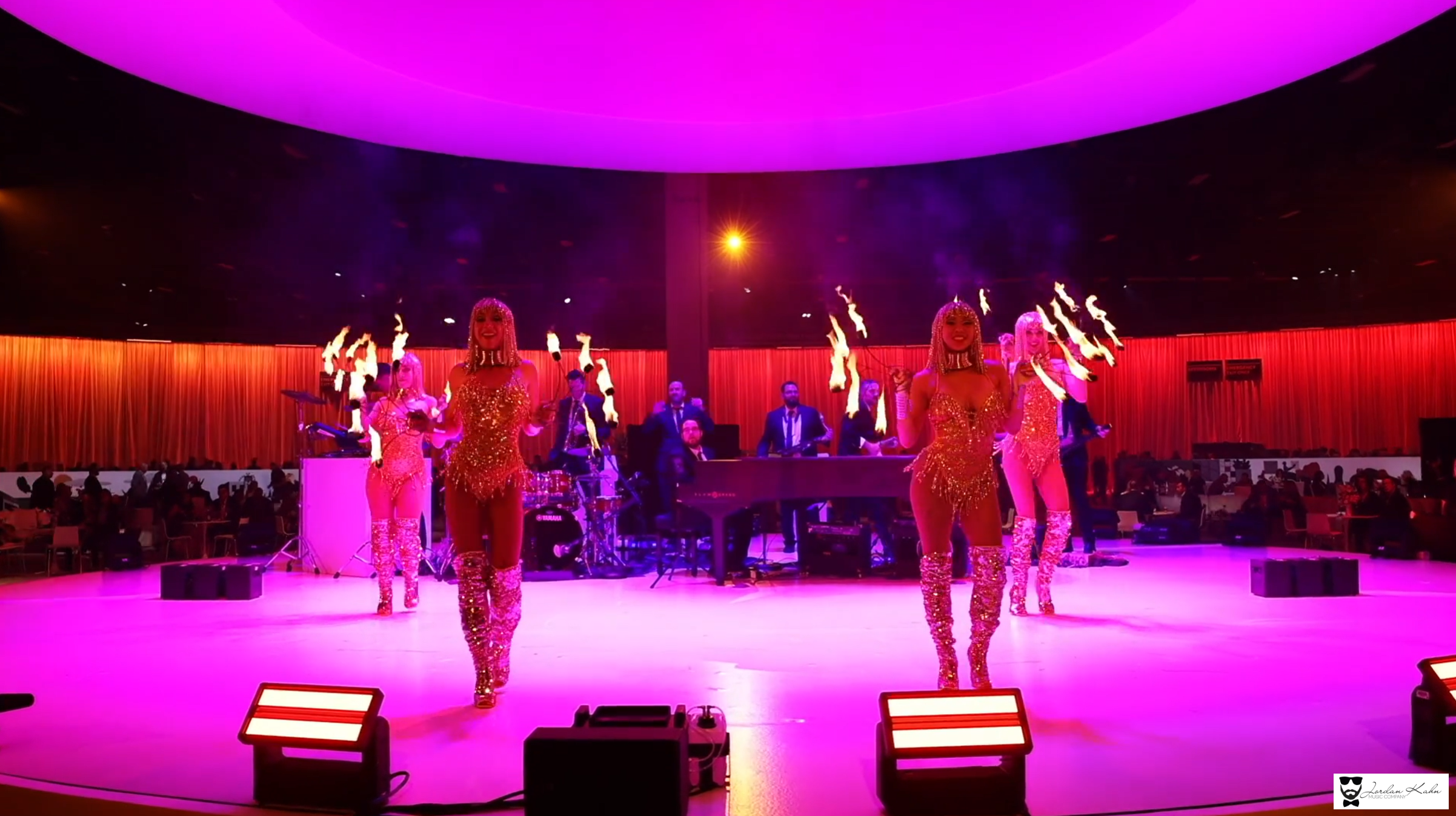
A great band cannot simply perform a rehearsed set and expect the room to respond. The performers have to watch people. They have to understand who is participating, who is sitting down, what the energy feels like and when it needs to move.
Jordan has about 250 songs his performers are expected to know, but songs are only part of the equation.
Tempo matters. Volume matters. Demographics matter.
“If you're a performer and you're not thinking about your audience, you're not performing, you're rehearsing.”
I love that distinction.
Jordan described intentionally moving between generations and musical preferences, especially during the first part of an event, rather than catering exclusively to one group. As the night progresses, the performers can respond more directly to whoever is actually on the dance floor and continue building the energy from there.
Volume receives the same consideration.
During dinner, guests should be able to have a conversation, even when seated close to a speaker. When dancing begins, the dance floor should feel full and immersive, but someone stepping away from it should still be able to speak comfortably.
There is a technical skill to creating that balance, but there is also a hospitality philosophy behind it.
Guests should be able to participate in the evening in different ways without one person's experience overwhelming another's.
Scaling Quality Requires Infrastructure
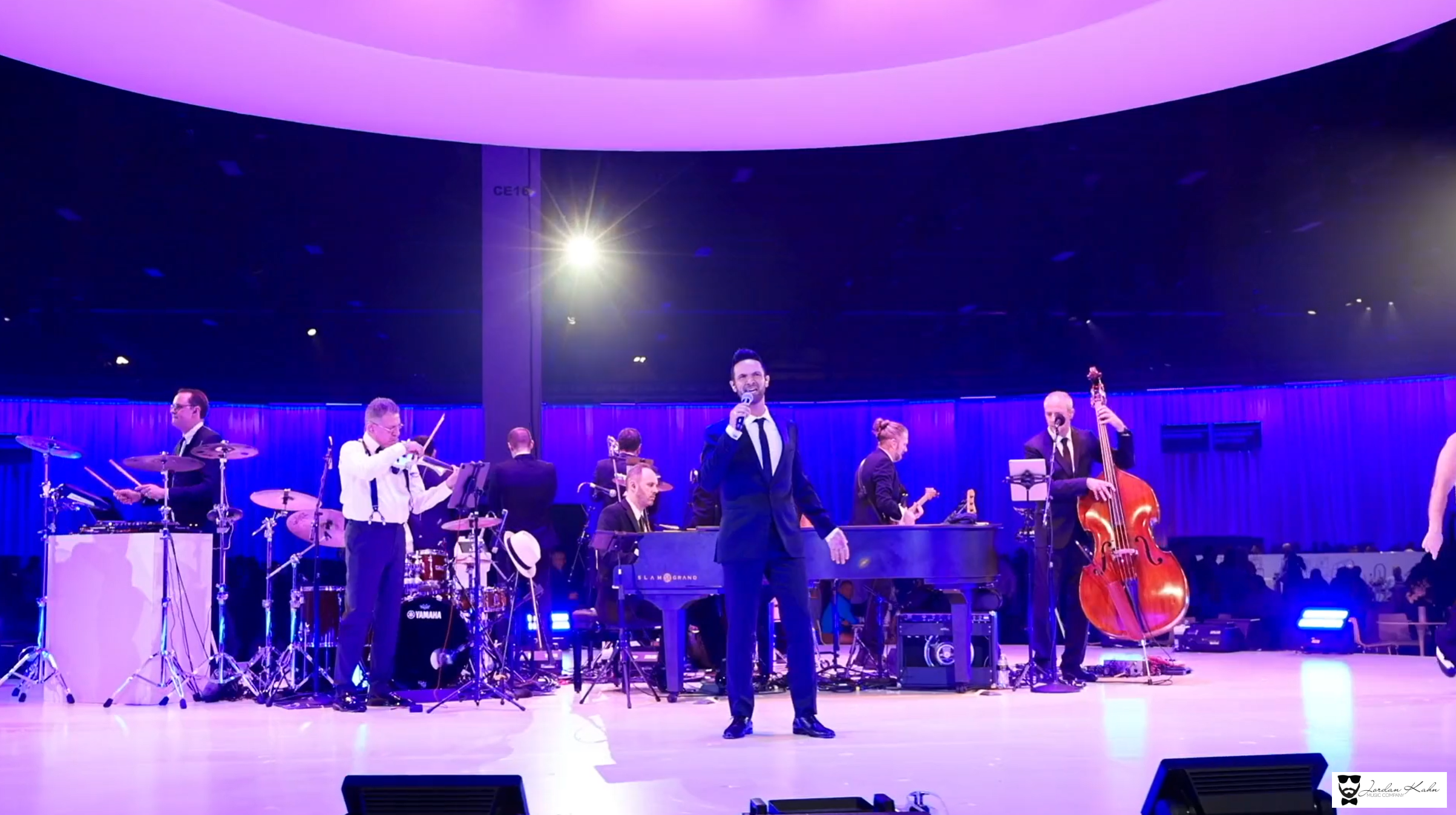
Jordan Kahn Music Company is now doing roughly 25 weddings on an average weekend, with teams operating across major markets throughout the United States.
That kind of scale does not happen because someone simply books more bands.
Jordan and his team have deliberately built infrastructure around the experience.
They positioned company-owned vans throughout the country so equipment can move efficiently without relying as heavily on unknown third-party inventory. Their teams travel in the day before an event rather than gambling on same-day transportation. Their equipment is standardized, including slimline black or white speakers designed to visually recede into an event rather than compete with it.
For someone outside the event industry, speakers and equipment cases may seem like minor details.
They are not.
A couple can spend considerably on scenic design, staging, florals, lighting and a dance floor, only to discover that bulky equipment, exposed wires or poorly considered production suddenly interrupts the entire presentation.
Jordan understands that the band does not exist separately from the design.
The equipment, technicians, arrival schedule and contingency planning are all part of delivering the performance well.
And if a flight is cancelled or something goes wrong?
The expectation is still that the team gets there.
“Things happen, right? It's how you deal with them.”
That sentence could apply to nearly every part of producing an event.
Scaling by Looking at the Business You Are Already Turning Away
Jordan's approach to growth also challenges an assumption that appears often in the event industry: that scaling means endlessly pursuing the highest-budget client.
When his company began selling out dates, Jordan looked at the inquiries they had already received.
Who were they turning away?
What budgets did those couples have?
What did those clients actually need?
The answers ultimately helped shape another tier of the company's offering, including Manhattan Orchestra.
Jordan believed there was a large audience of couples who wanted an excellent live band but were being overlooked while much of the industry pursued only the highest end of the market.
“A lot a lot of band companies, I think, are like chasing the one percenters. And what they don't realize is they're ignoring the everyday American.”
The important part is that he did not solve the problem by reducing the quality of the product.
Instead, he changed the business structure around it.
Certain pricing opportunities come with an expiration. Booking earlier allows the company to secure musicians and put teams to work while giving the client access to a different price point. The performance standards remain.
That distinction is important.
Scaling does not always require inventing an entirely new customer. Sometimes the clearest opportunity is sitting inside the inquiries a company already receives but has not figured out how to serve.
Clear Roles Make Delegation Possible
Jordan is also very candid about a challenge familiar to nearly every creative founder: micromanagement.
Eventually, you cannot do everything.
But “delegate more” is incomplete advice if nobody knows exactly what has been delegated.
Jordan thinks about each position as a clearly defined box. The employee should understand what sits inside the box, what they own and what is expected of them. Then they need enough room to actually do the job.
“A lot of creatives like to get gray with things because they maybe they haven't put enough thought into what that box should look like.”
That gray area is where people become confused, overloaded or resentful.
It is also why Jordan and his business partner work so well together. Their responsibilities are intentionally different. Jordan sits more heavily on the creative and customer-facing side, while his partner oversees much of the policy, procedure and operational side of the company.
They are opposites, according to Jordan.
That is precisely why the partnership works.
For creative businesses, there is a good lesson here. Scaling is not simply about finding more people who think exactly like the founder. Sometimes it is about finding people whose strengths cover areas the founder should not be trying to own.
Relationships Are a Long Game
Jordan and I also talked about something that is becoming increasingly important in an industry built on trust: the difference between networking and genuinely knowing people.
Jordan has invested heavily in relationships with planners and other creative partners through dinners, travel and time spent together away from a sales conversation.
To him, networking can feel like speed dating.
Friendship is different.
“You learn about who they are, where they came from, why they're here, what are their goals.”
That changes a working relationship.
As a planner, I know firsthand what it means to have a creative partner I trust when something changes onsite. Weddings are live productions. Something will eventually move, break, arrive late, get forgotten or need to be solved differently than we expected.
The people beside you in those moments matter enormously.
Jordan understands that.
“We're in a relationship business.”
The client relationship begins it, but the relationships among the professionals surrounding that client are a large part of what protects the experience.

Becoming the Groom Changed the Mission
After decades of performing at other people's weddings, Jordan recently experienced one from the other side.
He got married.
Even after spending most of his life around weddings, being the groom changed his perspective.
He described standing beneath the chuppah and feeling the emotion of the moment firsthand.
“It's like electricity.”
The experience strengthened something that was already present in the way he approached his company. Now he wants the couples his teams work with to feel what he felt.
The wedding also reinforced a lesson he repeated throughout our conversation: perfection is not the goal.
Things will happen.
A detail may change. Someone may ask a strange question. A plan may not unfold exactly as imagined. The important part is how everyone responds and whether the couple allows themselves to remain present for the reason the day exists.
His advice to couples at the end of our conversation was simple:
“Nothing is ever gonna go perfectly. All that matters is you and your spouse and that connection that you're creating and the rest of it is just is just for fun.”
And his message to wedding professionals was just as clear:
“Make it about your couples. Take yourself out of it.”
After nearly 45 minutes talking about growth, sales strategy, hiring, sound equipment, delegation and national infrastructure, we somehow arrived back at the same place Jordan started when he was 12 years old.
The joy.
That may be the most important part of his story.
A company can become bigger. The systems can become more sophisticated. The teams, markets and opportunities can multiply.
But the standard has to remain personal.
Because somewhere underneath every schedule, contract, speaker and spreadsheet are two people asking everyone around them to help make one day of their lives matter.
About Jordan Kahn
Jordan Kahn is the founder of the Jordan Kahn Music Company, a national private-event entertainment company providing bands and live entertainment for weddings and celebrations throughout the United States and internationally.
Explore the Jordan Kahn Music Company: Jordan Kahn Music Company
Follow Jordan and the company on Instagram: @jordankahnorchestra
Listen to the Full Conversation
Hear my full conversation with Jordan Kahn on The Wine and Dine Me Podcast, where we talk about scaling a creative business, building standards that actually work, pricing and accessibility, industry relationships, reading a room, and what becoming a groom taught Jordan after a lifetime spent performing at other people's weddings.
Listen on Apple Podcasts or Spotify, and follow along for more candid conversations with the people shaping events, hospitality and creative business.