
When you invite guests to a destination wedding, you are asking them to spend money and time before they receive a formal invitation. They need to book flights, request time off, and plan their own budgets. That is why the timing of a destination wedding save-the-date matters more than it does for a wedding in your hometown, and why the timeline from first notice to final RSVP deserves a plan of its own.
This guide covers when to send each piece, what guests need in between, and how to set deadlines that lead to a final count you can rely on.
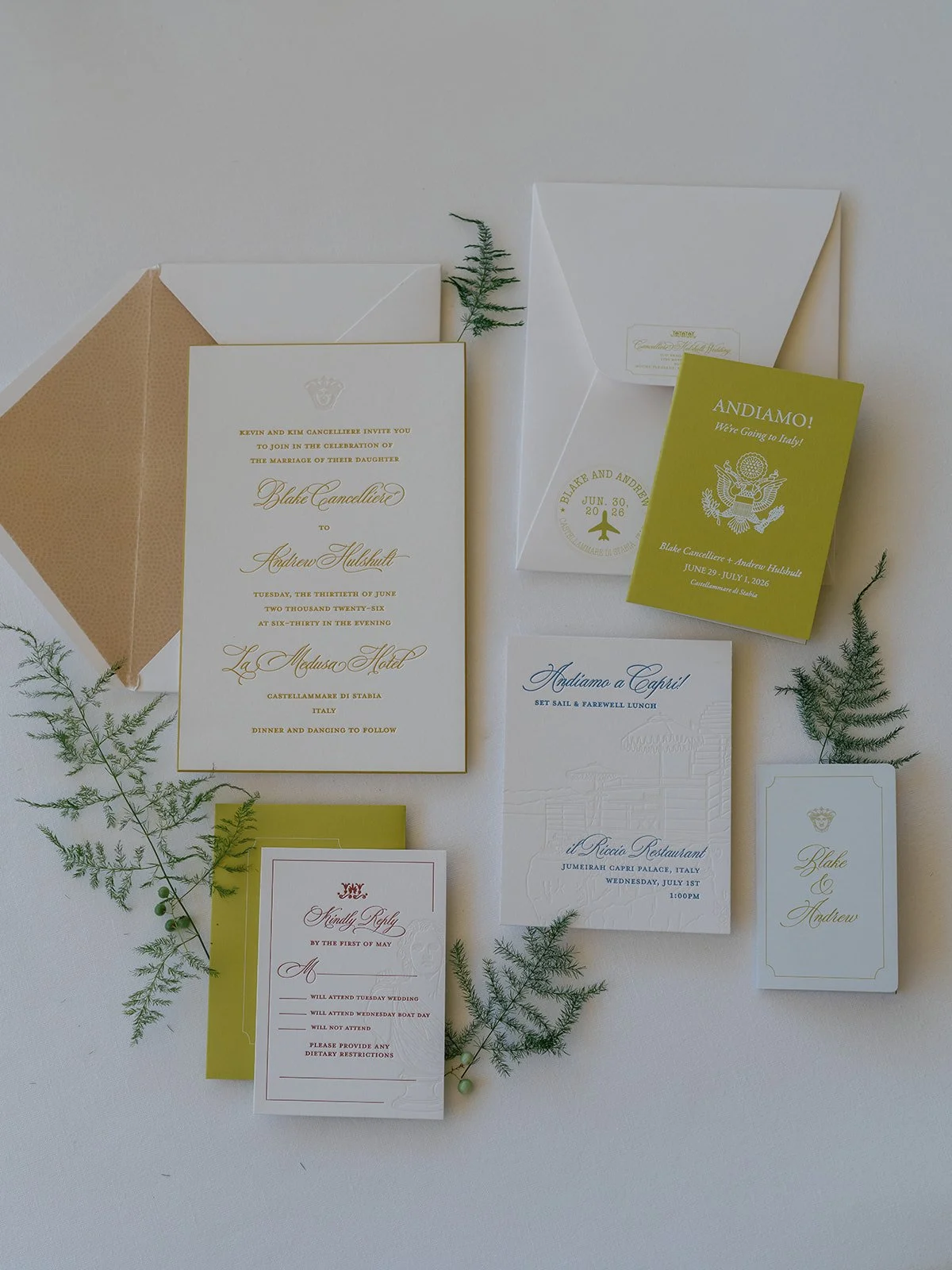
Quick Answer: When Should You Send Destination Wedding Save-the-Dates?
For a destination wedding, send save-the-dates about a year ahead, particularly if the wedding is international or requires significant travel. For other destination weddings, roughly 10 to 12 months is usually appropriate. Avoid mailing anything between Thanksgiving and New Year's, when holiday mail makes it easy for something important to get lost. Mail invitations approximately 12 to 13 weeks before the wedding, with an RSVP deadline that leaves room to follow up with late guests before vendor final payments come due.
Why Do Destination Weddings Need Earlier Notice?
Guests make decisions in a certain order. They look at the date, check their calendars, think about the cost of flights and lodging, and decide whether they can go. The earlier you give them the date and the destination, the more likely it is that people can plan to attend, and the less likely it is that the people you most want there will have a conflict.
For international travel, the planning window is longer still. Guests may need to renew a passport, arrange time off work, find childcare, or save for the trip. Giving them time is a form of hospitality.
When Should You Send the Save-the-Date?
If the date and destination are confirmed, we like guests to receive a save-the-date around the one-year mark, particularly for an international wedding or a destination that requires significant travel. We generally would not send it much earlier than a year. Too far ahead, and the date slips out of mind, or guests' circumstances change before the invitation arrives. For other destination weddings, somewhere around 10 to 12 months is usually appropriate.
Couples should also consider their particular guest list and what may be happening in their friends' and families' lives. Every group is a little different. If many guests have young children or need to arrange extended time off, an earlier notice may help. If most are flexible and live nearby, a bit less lead time may be fine.
The rest of the timeline follows from that first date. Invitations go out approximately 12 to 13 weeks before the wedding, and guests then have until the RSVP deadline to respond. We leave about a week after that deadline to track down anyone who has not answered. The final count should be locked before vendor final payments begin coming due, which is often at least 30 days before the wedding. The sections below take each of those steps in turn. These timings are our planning guidance and a starting point, and your own calendar and guest list should adjust them.
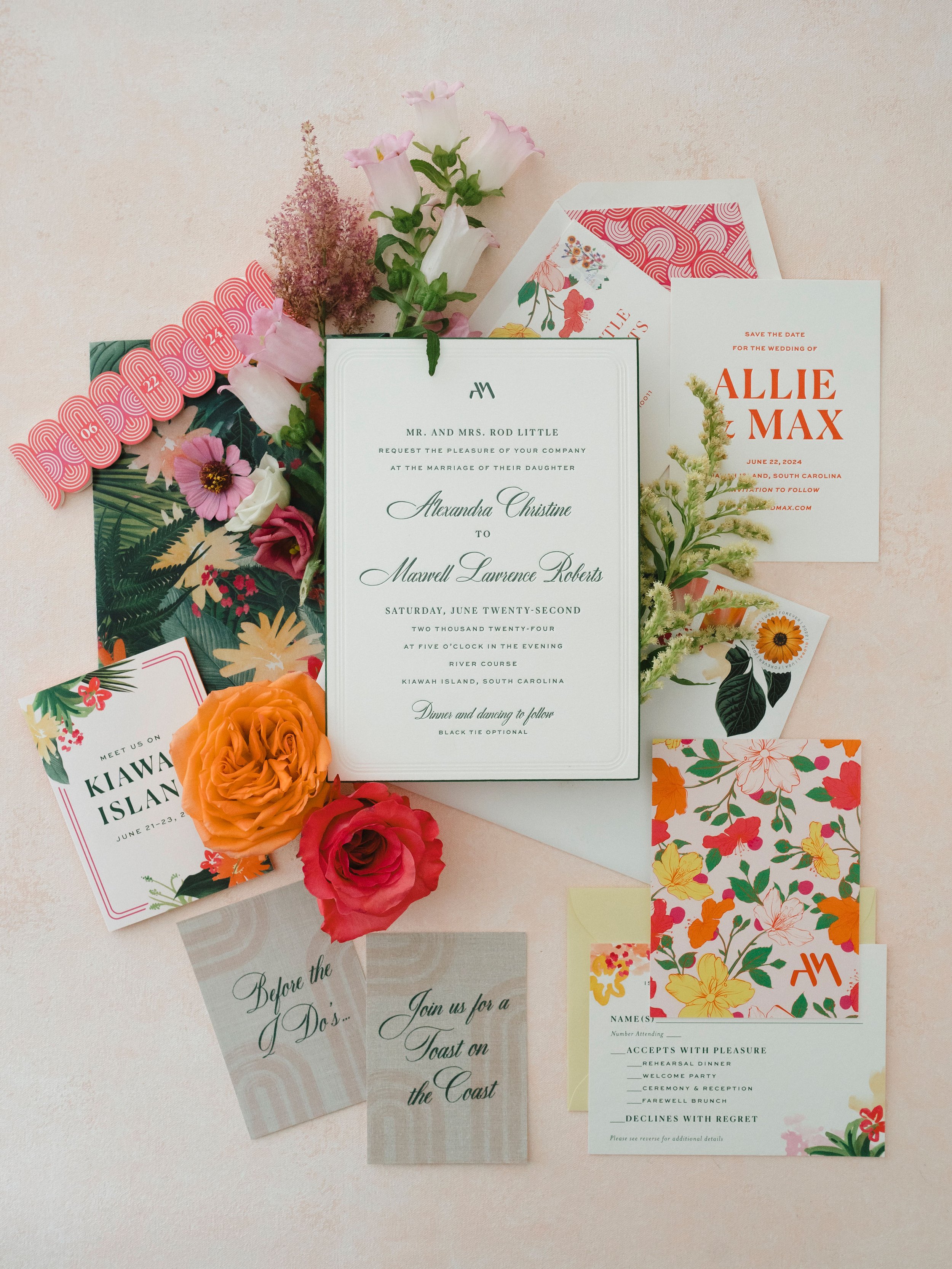
What About the Holiday Mail Cycle?
This is the detail that catches couples out. We prefer not to mail save-the-dates or invitations between Thanksgiving and New Year's. There is so much holiday mail during that period, and it is very easy for something important to get lost in the shuffle.
That affects your calendar more than you might expect. A wedding in the fall or early winter has its save-the-date window land close to, or inside, the holiday period. Depending on the wedding date, we decide strategically whether it makes more sense to mail before the holidays or after them. A save-the-date that goes out a few weeks earlier than planned, or a few weeks later, is usually better than one that is buried in a stack of cards.
What Should the Save-the-Date Include?
At minimum, a save-the-date should include the names of the couple, the date, and the location. For a destination wedding, it helps to add a link to a wedding website, even a simple one, where you will post travel and lodging information as it is confirmed.
It is also worth saying how guests will receive more details, and when. A line such as "Formal invitation and travel details to follow" tells guests what to expect and when.
What not to promise too soon
Do not promise a room block, a shuttle, or an event schedule until they are confirmed. If the venue is confirmed but the hotel contract is not, say that lodging details are coming. It is better to under-promise on the first communication than to correct it later.
What Should Guests Receive Between the Save-the-Date and the Invitation?
The months in between are where many couples lose momentum, and where guests start to make real decisions. A website update or a short email as details are confirmed can carry guests through. Useful information includes where to stay and how to book, how to get there and the nearest airport, what the weather and dress expectations are, and a rough outline of the weekend.
Our guides on guest accommodations and hotel blocks and designing the guest experience over a wedding weekend go deeper on what guests need to feel looked after before they arrive.
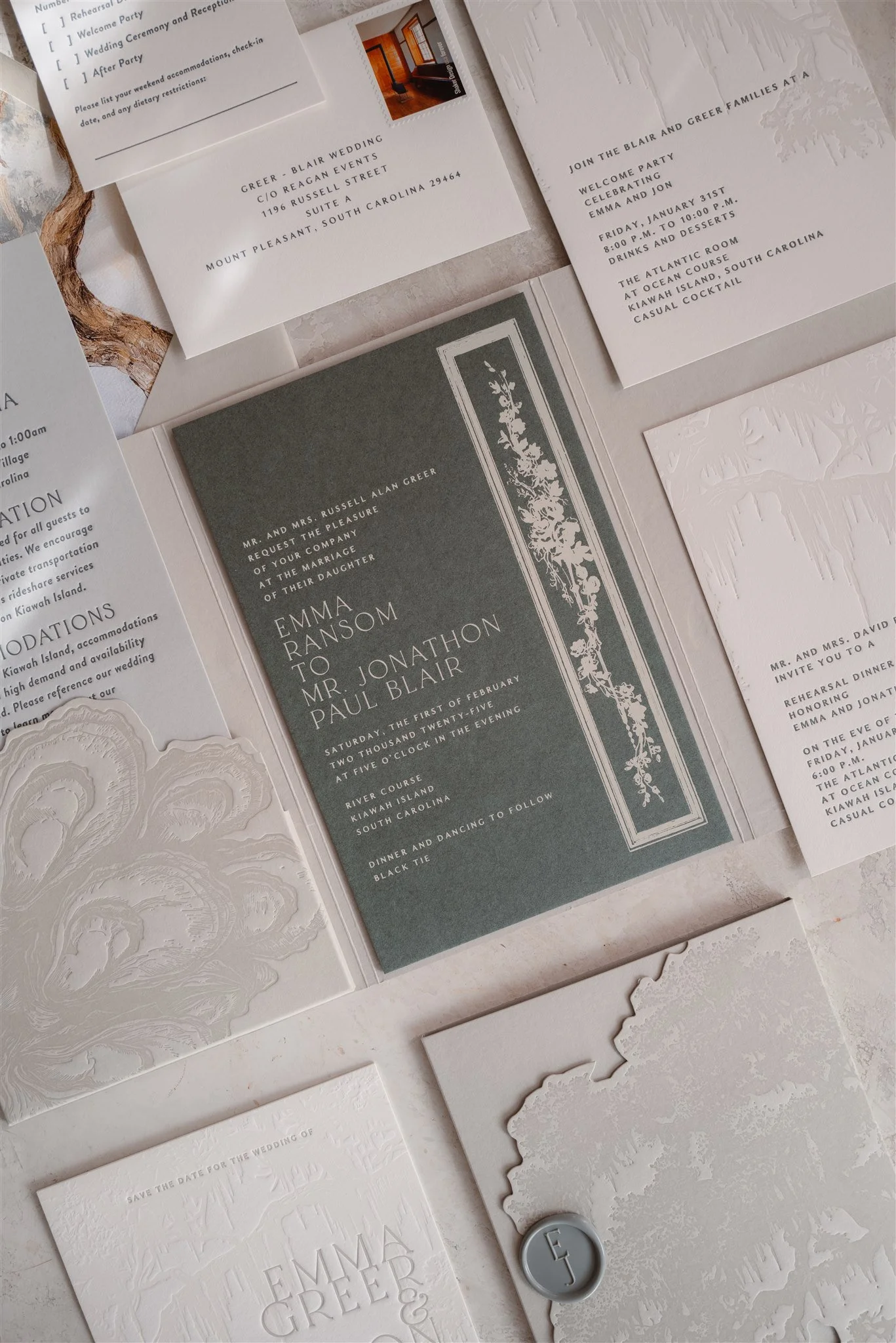
When Should Invitations Go Out?
We like to mail invitations approximately 12 to 13 weeks before the wedding. That may sound earlier than what you have seen for local weddings, but it is deliberate. The mail system can be unreliable, and guests need enough time to receive the invitation, make their decision, and submit their RSVP, whether they respond online or through the mail. For a destination wedding, some of those guests are making final travel decisions, which is another reason to give them time.
If your invitation includes a response website, check it carefully before it goes out. A broken link or a confusing form at this stage creates the kind of delay you built the timeline to avoid.
How Do You Set the RSVP Deadline?
Set the deadline, then build a short buffer after it. We like to leave about a one-week grace period after the RSVP deadline, because inevitably there will be guests we need to track down. Plan to spend that week contacting the people who have not answered, rather than treating the deadline as the end of the process.
The reason this matters is that your final count drives a long list of other decisions. It has to be established early enough to finalize tables, catering numbers, rental chairs, place settings, and other quantities before vendor final payments begin coming due, which is often at least 30 days before the wedding. If the count is still moving at that point, you are making payments and ordering rentals on estimates, and any later change can mean extra cost or a scramble.
Work backward from that point. If final payments are due 30 days before the wedding, you need the final count a few days earlier, the grace period before that, and the RSVP deadline before the grace period. Check your own vendor contracts for the actual dates, because they vary.
What Changes for an International Wedding?
International travel adds time and steps for guests. Passports need to be valid for the trip, and entry requirements for U.S. travelers to Europe have been changing, with new border systems being phased in. Check current requirements with the U.S. Department of State and the destination country's authorities before you give guests any guidance, and encourage guests to check their passports early, ideally when they receive the save-the-date.
Jet lag and arrival days also matter. Guests often benefit from arriving a day early, which affects when you share the schedule and which nights you ask them to book. If you are planning in Italy, our guest travel guide for U.S. couples covers arrivals and transfers.
What If the Date or Venue Is Not Final?
If you are still waiting on a venue contract, it is better to hold the save-the-date than to send one and change it. Guests who book flights on a date that then moves will not forget it.
If you must send something early, make it a short notice that says the plans are in progress, give the month and region if they are certain, and promise a full save-the-date when the details are confirmed. Be honest about what is settled and what is not.
Who Should Receive the Save-the-Date?
Anyone you are fairly sure you will invite. It is easier to send a save-the-date to everyone on the likely list than to explain later why someone who received one did not receive an invitation. Settle your guest list in broad terms before the save-the-dates go out, including which guests will be invited to the whole weekend and which to a single event, and avoid sending to anyone whose invitation is still in question.
Think about households with children, plus-ones, and out-of-town relatives as you build this list, because each one changes the headcount, and the headcount changes the budget and the venue conversation.
What Does a Realistic Timeline Look Like?
This is a hypothetical example, not a client wedding. Suppose a couple is marrying in a destination overseas on a Saturday in late June.
The save-the-date would go out around the one-year mark, which is late June of the previous year, well clear of the holiday window. Travel details and the website would follow as hotel and transportation information is confirmed through the fall. Because the invitation window of 12 to 13 weeks before the wedding falls in late March, the invitations would mail around then, with an RSVP deadline a few weeks later. A one-week grace period would follow for follow-up, and the final count would be set before vendor payments are due in late May.
A wedding in the fall or early winter works differently. For a wedding between roughly September and December, the 10 to 12 month window for the save-the-date falls close to or inside the period between Thanksgiving and New Year's. Those couples decide strategically whether to mail a few weeks earlier, in the autumn, or to wait until January, and the right choice depends on how international the trip is and how much notice their guests need.
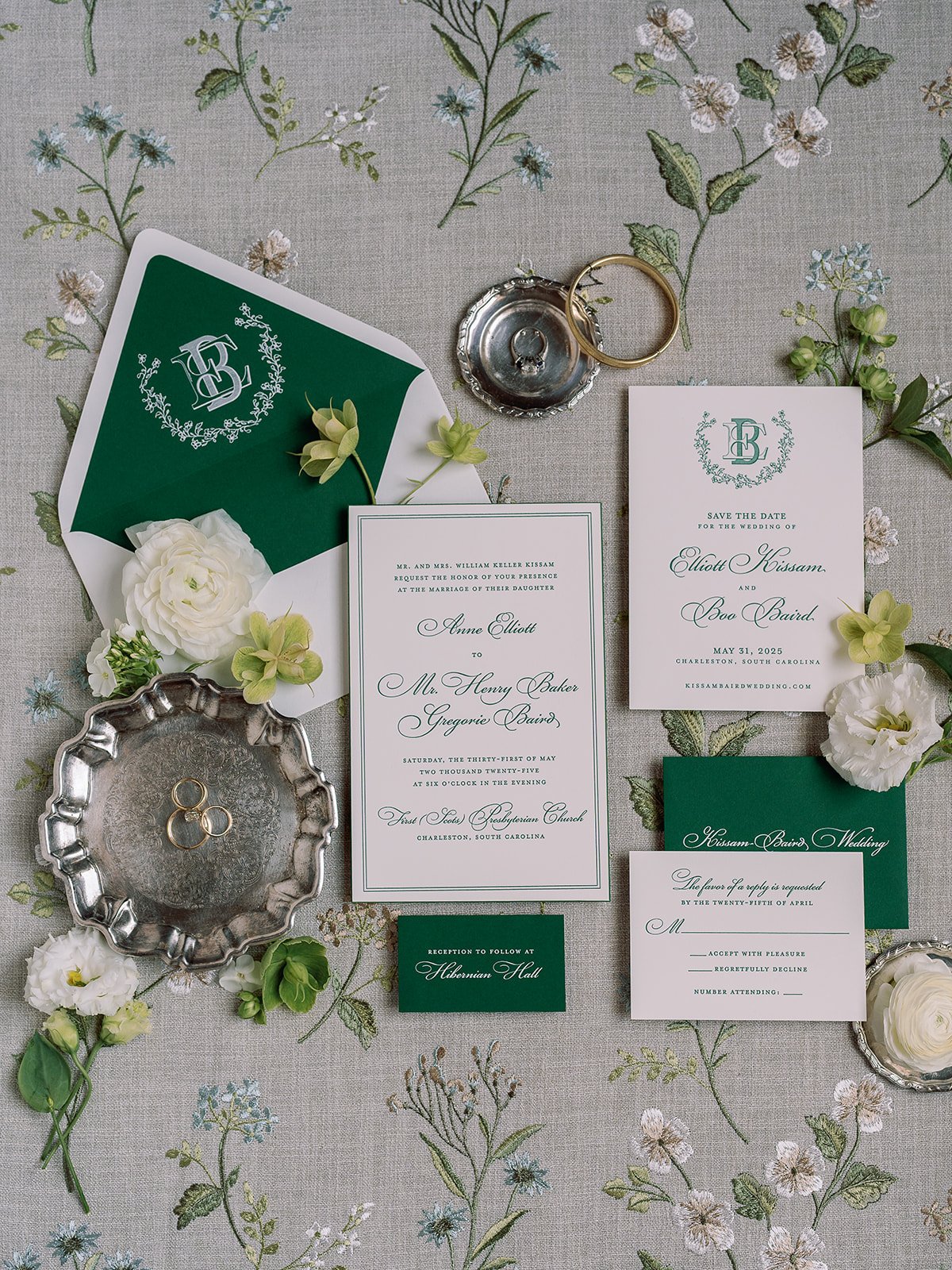
How Do You Keep Guests Informed Without Overwhelming Them?
A destination wedding generates a lot of information, and guests tend to respond better to a few clear updates than to a stream of messages. Choose one place where details live, usually the website, and use email or a mailed card to point guests to updates rather than repeating them. Date your updates, so guests know which information is current, and keep the tone useful and calm.
When something changes, say so plainly and as early as you can, along with what guests need to do about it.
How Does This Fit Into the Larger Planning Timeline?
Guest communication is one thread in a long list of dates: venue and vendor contracts, hotel blocks, design decisions, travel logistics, and payments. Each of them touches the others. The save-the-date depends on a confirmed date and location. The invitation depends on a schedule. The final count depends on the RSVP deadline, and the payments depend on the final count. Missing one slows the rest.
This is the kind of sequencing our event planning and management team handles, and our planning process shows how the pieces fit together over time. For etiquette questions on wording and who to invite, see our guide to destination wedding etiquette. When you are ready to plan the full timeline, begin a conversation with us.
Frequently Asked Questions
How far in advance should you send save-the-dates for a destination wedding?
Around the one-year mark for an international wedding or a destination that requires significant travel, and roughly 10 to 12 months for other destination weddings. We generally would not send one much earlier than a year.
Should you send save-the-dates before booking the venue?
It is better to wait until the date and destination are confirmed. If you need to give early notice, send a short note and promise a full save-the-date.
When should invitations be mailed for a destination wedding?
We like to mail invitations approximately 12 to 13 weeks before the wedding, so guests have time to receive them, decide, and respond.
When should the RSVP deadline be?
Set it so that you can add about a week of follow-up and still have your final count before vendor final payments, which are often due at least 30 days before the wedding. Check your contracts for exact dates.
Can you mail invitations between Thanksgiving and New Year's?
We prefer not to. There is so much holiday mail that important items can get lost, so depending on your wedding date, we decide whether to mail before or after that period.
Should the save-the-date include a wedding website?
A simple website is helpful for a destination wedding, because guests can find travel and lodging details as they are confirmed. Only post what is final.
What if guests cannot afford to travel?
Early notice helps, and so does sharing a range of lodging options. Some guests will still be unable to attend, and that is a normal part of a destination wedding.