
The rehearsal dinner is often the first time both families and the wedding party sit at the same table. That makes it easy to treat as a small event, and it is the reason it deserves its own plan. The decisions that matter come before the venue: who is invited, who is hosting, and how the evening should feel. In Charleston, where most couples are welcoming guests who have traveled, those answers also decide how Friday fits with the welcome party and everything that follows on Saturday.
This guide takes the decisions in the order we would make them, from the guest list to the setting to how the night ends.
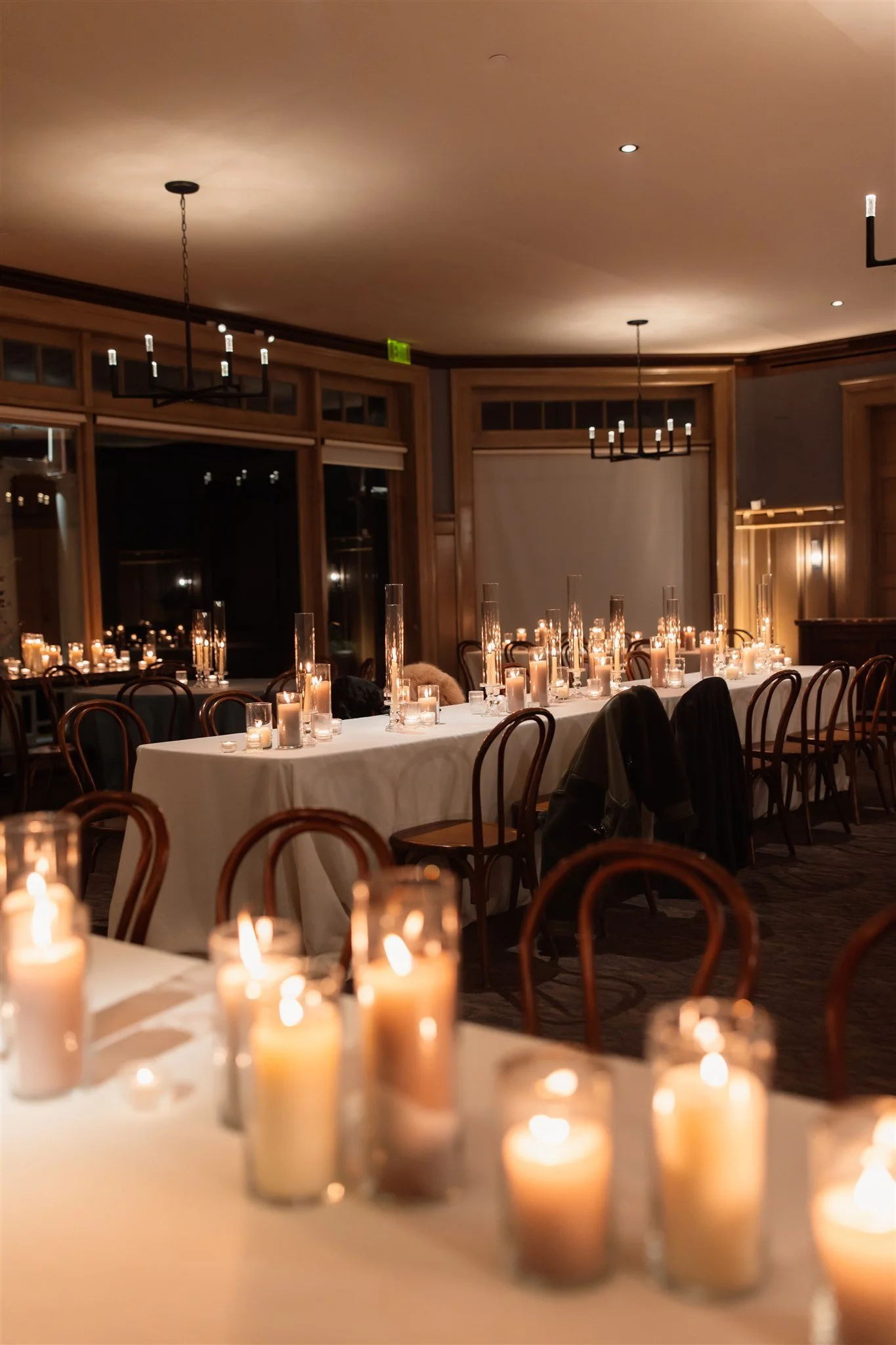
Quick Answer: How Do You Plan a Charleston Rehearsal Dinner?
A rehearsal dinner traditionally hosts the wedding party, immediate family and officiant, while a welcome party hosts the wider group of traveling guests. At a destination wedding that line is harder to hold, because etiquette has long included out-of-town guests, which can mean inviting almost everyone. Guest count, who is hosting and budget decide whether you hold two events, one combined event, or a small dinner followed by a larger party. Settle that structure first, then choose the setting.
What Is the Difference Between a Rehearsal Dinner and a Welcome Party?
The difference is mostly who is in the room and what the evening is for. A rehearsal dinner is a seated, hosted dinner, usually smaller, with toasts that are personal because the people giving them know the couple well. A welcome party is wider and looser. Its job is to greet everyone who traveled, let guests meet each other, and set the tone for the weekend.
When the two are kept separate, each can do its job. The dinner is intimate, and the party is generous. When they are blurred together without a plan, the result is often a large dinner that neither feels intimate nor works as a party. If you are planning a larger Friday gathering, our guide to welcome party ideas for a destination wedding weekend covers that event in detail, so we will stay with the dinner here.
Who Should Be Invited to the Rehearsal Dinner?
The core list is usually the wedding party, immediate family on both sides, the officiant, and anyone with a role in the ceremony, such as readers or children who will walk. Partners and spouses of those guests are typically included as well. That list alone can reach 25 to 40 people, so it is worth counting before you decide anything else.
The harder question is out-of-town guests. Historically, etiquette said that guests who traveled for the wedding should be included in the rehearsal dinner. At a destination wedding, that can effectively mean inviting everyone, which is not always practical, financially or in terms of space. Some couples draw the line at immediate family and the wedding party. Others invite every guest who traveled. Neither is wrong, but the choice should be made deliberately and early, because it drives the budget, the venue and the rest of the weekend.
If the decision is hard, put numbers beside it. Price the evening at the smaller headcount and again at the larger one, then ask who you most want at the table that night and who you would rather see at the welcome party. The comparison usually makes the answer clear.
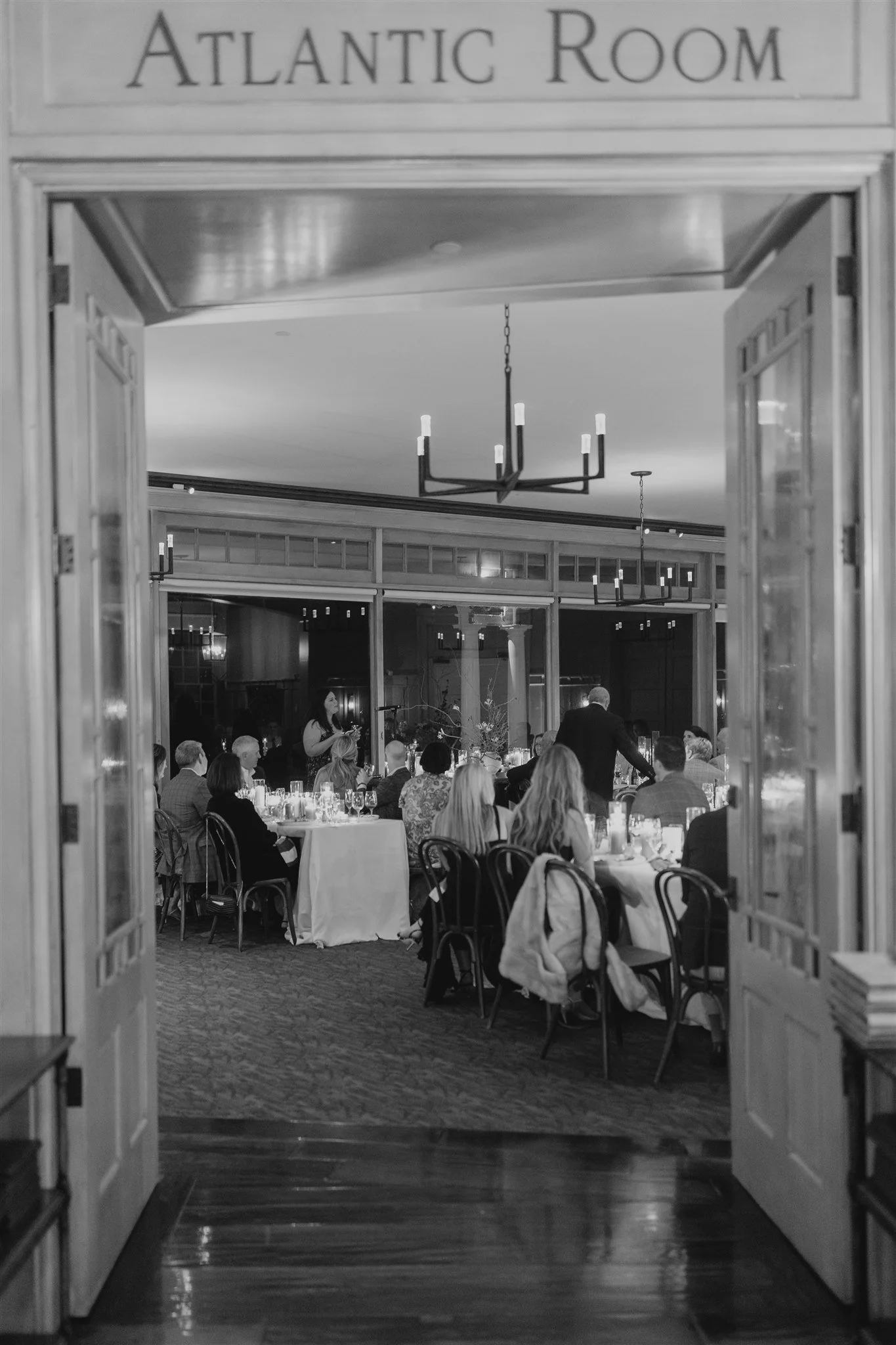
Should You Combine the Rehearsal Dinner and the Welcome Party?
We usually prefer a separate rehearsal dinner. It gives the couple a chance to be toasted in an intimate setting before the evening opens up to the larger group. Keeping the dinner small also means the toasts can be personal rather than performed for a crowd.
A smaller dinner followed by a larger welcome party can also make financial sense. The people hosting the rehearsal dinner may not be able to host every guest, while another family member or host takes responsibility for the welcome party and shares the cost. Two events can mean two hosts, which spreads the burden more than one very large evening.
There are couples, though, who cannot find a comfortable place to draw the line on the rehearsal dinner list. For them, combining the two into one larger event can work well. If you combine them, still make room for toasts. Guests do not all need to be formally seated for that to work. We have done larger, more casual gatherings where everyone gathered around a pool for the toasts, which brought the full guest list into a moment that would otherwise have been very intimate.
Who Hosts the Rehearsal Dinner and Who Pays?
Tradition has the groom's family hosting the rehearsal dinner. That convention is less fixed than it used to be. Many couples now host it themselves, both families share the cost, or one family takes the dinner while another takes the welcome party. Treat the tradition as a starting point for the conversation, not a rule.
What matters is that the host is decided before the venue is booked. The host sets the budget, often has opinions about the guest list, and may want a say in the setting. When that conversation happens after a venue is chosen, it tends to reopen decisions that were already made. Hosting practice varies by family and region, so when in doubt, ask the people involved directly and early.

What Types of Settings Work for a Charleston Rehearsal Dinner?
Charleston offers more kinds of settings for a Friday dinner than most couples expect. Rather than name specific venues, it helps to think about the type of space and what each one asks of you.
Private dining rooms
A private room in a restaurant is often the simplest option for a smaller dinner. The food, service and rentals are handled in one place, and weather is not a concern. Check capacity for a seated dinner, whether toasts and a microphone are allowed, and what minimums apply.
Courtyards and gardens
Charleston's courtyards give a dinner a sense of place, and they suit a long table well. They also carry the most variables: weather exposure, power, restrooms, and how guests get in and out. Ask about neighbors and sound limits, and plan where the evening moves if it rains.
Waterfront spaces
Waterfront settings suit larger groups and an easy cocktail hour. Wind, heat, and bugs in warmer months are the usual concerns, as is how close the setting is to where guests are staying.
Private homes
A private home can feel personal, but it usually means bringing in nearly everything: kitchen, rentals, staff and often parking. Consider access for older guests and whether the neighborhood has rules on events.
Whichever type you consider, think about how guests will arrive and leave. Parts of the historic district have limited parking and are easiest to reach by car service or on foot, so it helps to know where people are staying before you commit. We also look at whether the setting feels different from Saturday's wedding. The dinner should not compete with the wedding day.
What Time Should the Rehearsal Dinner Start and End?
Start with the rehearsal itself. It usually happens late in the afternoon, at the ceremony location, and the dinner follows immediately assuming everyone is dressed to go straight to dinner. Work backward from the time the dinner needs to end, rather than forward from the rehearsal.
A dinner that runs into the late evening tends to catch up with the wedding party the next morning, so many couples aim for a defined end. Summer heat is another factor. A later start can be more comfortable outdoors, though it pushes the end later too. The City of Charleston has rules on noise and outdoor events, and each venue sets its own end time, so confirm both before you plan amplified music or a late toast.
How Should the Evening Run?
A simple order tends to work best. Guests arrive and have a drink, everyone sits, the meal is served, and toasts follow, either between courses or after dinner. Decide this in advance with the host, since a loosely run toast section can take far longer than anyone expects.
Some points to settle early:
Rehearsal first or dinner first. Rehearsing first keeps the wedding party focused, since they have not been drinking, and it means the dinner can run without a hard stop.
Seating. A rehearsal dinner is often the first time the families sit together, so a plan that mixes them is kinder than leaving each side at its own end.
Toasts. Decide who speaks, in what order, and who will keep time. Give speakers a rough length so the evening does not drift.
Dietary needs. Collect these with the RSVP, and confirm them with the kitchen ahead of the dinner.
The ending. Tell the host and the wedding party when the evening closes, so there is a natural point to say goodnight.

What Should the Weather Plan for a Charleston Rehearsal Dinner Include?
Charleston weather can be warm and humid for much of the year, and summer evenings can bring storms. Fall and spring are more comfortable, though evenings can cool down once the sun sets. Check seasonal norms with the National Weather Service before you commit to an outdoor plan.
If any part of the dinner is outdoors, the backup needs to be a real plan rather than a hope: a covered or indoor space that can hold the same number of guests, a decision time, and someone who owns the call. The same applies to a tent, which needs its own conversation about power, flooring and approvals. Our guide to building a rain plan that actually works walks through how we think about it.
How Does Friday Night Affect the Wedding Day?
Friday sets up Saturday more than couples expect. A late night affects the wedding party's morning, older guests may need an early finish, and dietary needs and travel fatigue can show up at the ceremony. It helps to plan Friday with Saturday's schedule in front of you, and our Charleston wedding weekend timeline shows how the pieces fit together.
The Friday mistake we see most often is not hiring the planner for both nights. When one team plans the wedding and another plans Friday, nobody holds the full scope of the weekend. If hiring one planner for both events is not possible, we would at least recommend using as many of the same vendors as you can.
The same caterer, florist or other key vendor on both nights means someone understands the weekend as a whole. They can help each event feel distinct while keeping a common thread between the two. It can also create savings, such as repurposing florals or other design elements. It also streamlines the work for everyone, while still giving the separate hosts, who may be paying for each event, autonomy over their own evening.
If you are closing the weekend as well, the morning-after brunch is worth planning at the same time, so that all three events work as a set.
Planning the Whole Weekend as One Plan
A rehearsal dinner touches the guest list, the budget, the timeline and the vendor team, which is why we plan it alongside the wedding rather than after it. If you are planning a Charleston weekend, our approach to planning a Charleston wedding weekend brings the events together, and how our planning process works shows how the decisions fit over time. When you are ready to talk through Friday and the rest of the weekend, begin a conversation with us.
Frequently Asked Questions
Who pays for the rehearsal dinner?
Tradition has the groom's family hosting, but practice varies. Many couples host it themselves, or families share the cost. Decide the host before you book a venue.
Who should be invited to a rehearsal dinner?
Usually the wedding party, immediate family, the officiant and anyone with a ceremony role, plus their partners. At a destination wedding, couples also decide whether to include guests who traveled.
Do you need both a rehearsal dinner and a welcome party?
Not always. A smaller dinner followed by a larger party works for many couples, and some combine the two into one event. Whichever you choose, make room for toasts.
How long does a rehearsal dinner last?
That depends on the plan and the host. Work backward from a defined end time that respects the next day, and confirm venue and city limits on sound.
How far ahead should you book a Charleston private dining space?
Start as soon as your date and guest count are set, since private spaces are limited. Confirm availability, minimums and capacity directly with each venue.
Can you hold a rehearsal dinner outdoors in summer?
It is possible, with a plan for heat, humidity and storms, and a backup space that holds the full